In the medical field, not only scientific publications play an important role, but also the relevance of the data that the author uses and provides. In our article, we will explain how outdated sources affect the quality of a medical study and its chances of publication in a journal.
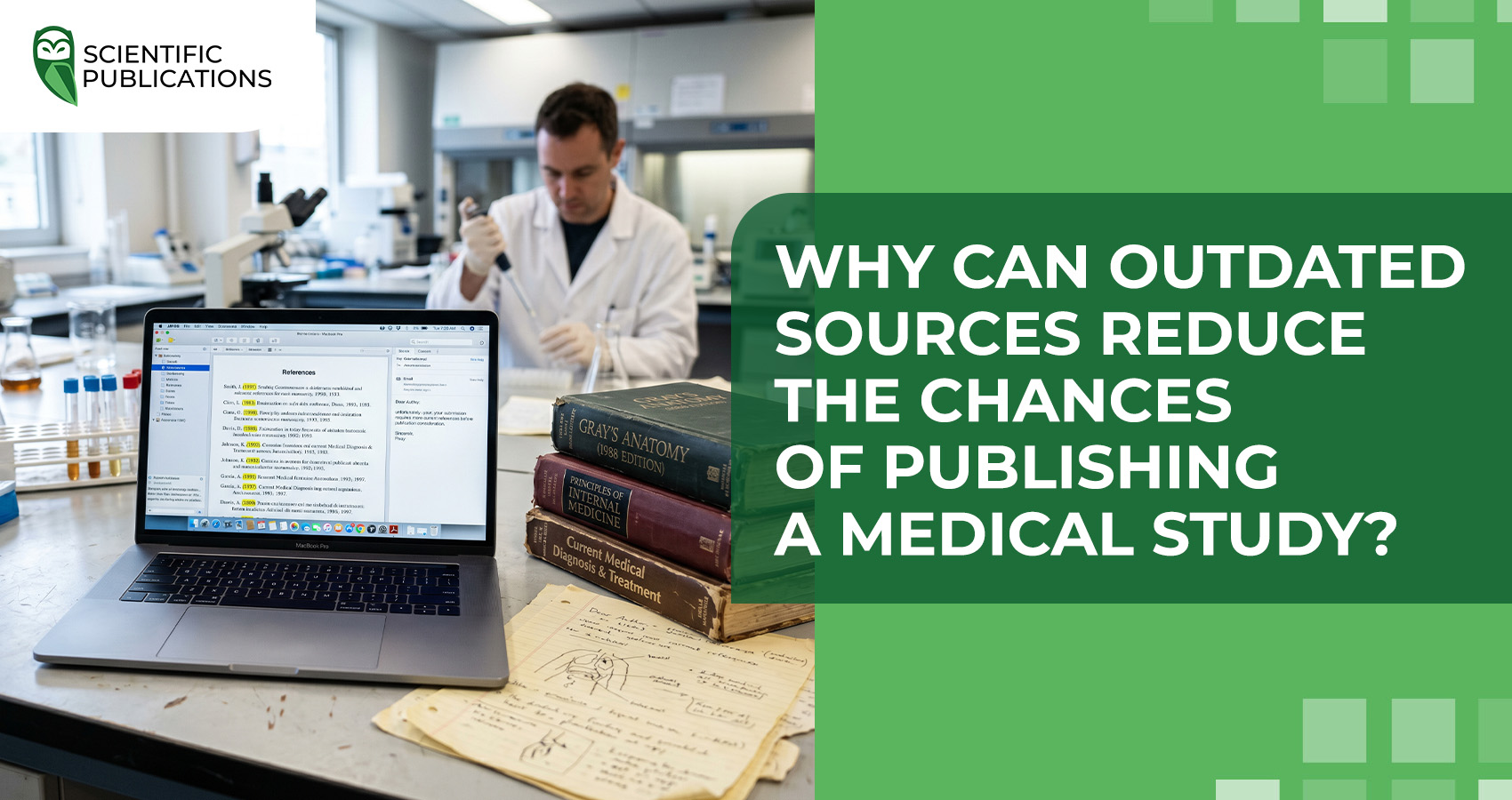
Why is it important to use up-to-date sources in a medical article?
Since medicine develops quite rapidly, it is important to pay attention to the relevance and reliability of information in research. Publications that use outdated sources may not correspond to the current state of the medical field and may negatively affect the editorial decision.
According to the international ICMJE recommendations for medical journals, authors should, where possible, refer to original research sources rather than only to review articles. Therefore, for a high-quality medical manuscript, it is important not simply to compile a reference list, but to select relevant, verified and sufficiently up-to-date sources that reflect the current state of the topic under study.
How do outdated sources affect the quality of medical research?
- Risk of incorrect conclusions. When preparing a scientific article, current data should be taken into account, in particular new clinical trials, systematic reviews, meta-analyses or updated recommendations. If the author relies exclusively on old sources, the rationale of the work may appear incomplete.
- Reduced chances of receiving a positive review. During evaluation, reviewers take into account how well the author is familiar with the current state of the topic. If the work does not take into account new studies or current recommendations, this creates the impression that the author has not analysed the necessary literature.
- Risk to patients. The information used in the study may relate to certain clinical decisions, in particular dosage, contraindications, adverse reactions, etc. Therefore, it is important not to rely on outdated sources, as this may have consequences directly during the treatment of patients.
How can the relevance of data affect the editorial decision?
For a medical journal, the relevance of data is one of the important aspects on which the editorial board of the journal may rely when making a decision regarding the manuscript. Usually, this indicator reflects the article’s compliance with current trends in science and its practical value.
Reliance on outdated sources may negatively affect the assessment of the work. This, in turn, may lead to the study being sent for revision or rejected by the editorial board.
If the author uses irrelevant or outdated data, the editorial board may draw the following conclusions:
- the article does not take into account up-to-date information and current research in a particular medical field
- the rationale of the topic is incomplete
- the results are not compared with current data
- the conclusions do not reflect the current state of the medical field
- the author has not worked through the literature sufficiently well
- the work requires substantial revision
At the same time, this does not mean that outdated data cannot be used in scientific articles at all. Primary sources in which a particular method, classification or concept was first described are usually appropriate. However, if there are current studies that substantially update understanding of the topic, preference should be given to new information.
It should be remembered that the relevance of data is only one of the aspects to which the editorial board and reviewers pay attention. Therefore, when preparing a scientific article, it is important to properly justify the chosen topic, carefully select sources and take current recommendations into account. It is also worth explaining in detail the significance of the results obtained and the prospects for their use. This may increase the chances of successful publication.
Need help with publishing a scientific article in the field of medicine? The specialists of Scientific Publications are ready to provide professional support. To receive a free consultation, fill in the form below, and our manager will contact you shortly. Together towards successful publications!