Information and data obtained during a medical professional’s daily clinical practice can be a valuable basis for preparing scientific publications. Monitoring the course of diseases, treatment outcomes, clinical cases and the analysis of medical records allow doctors not only to systematise their professional experience, but also to contribute to the development of science. How can medical professionals use data from clinical practice in scientific publications? We will discuss this in our material.
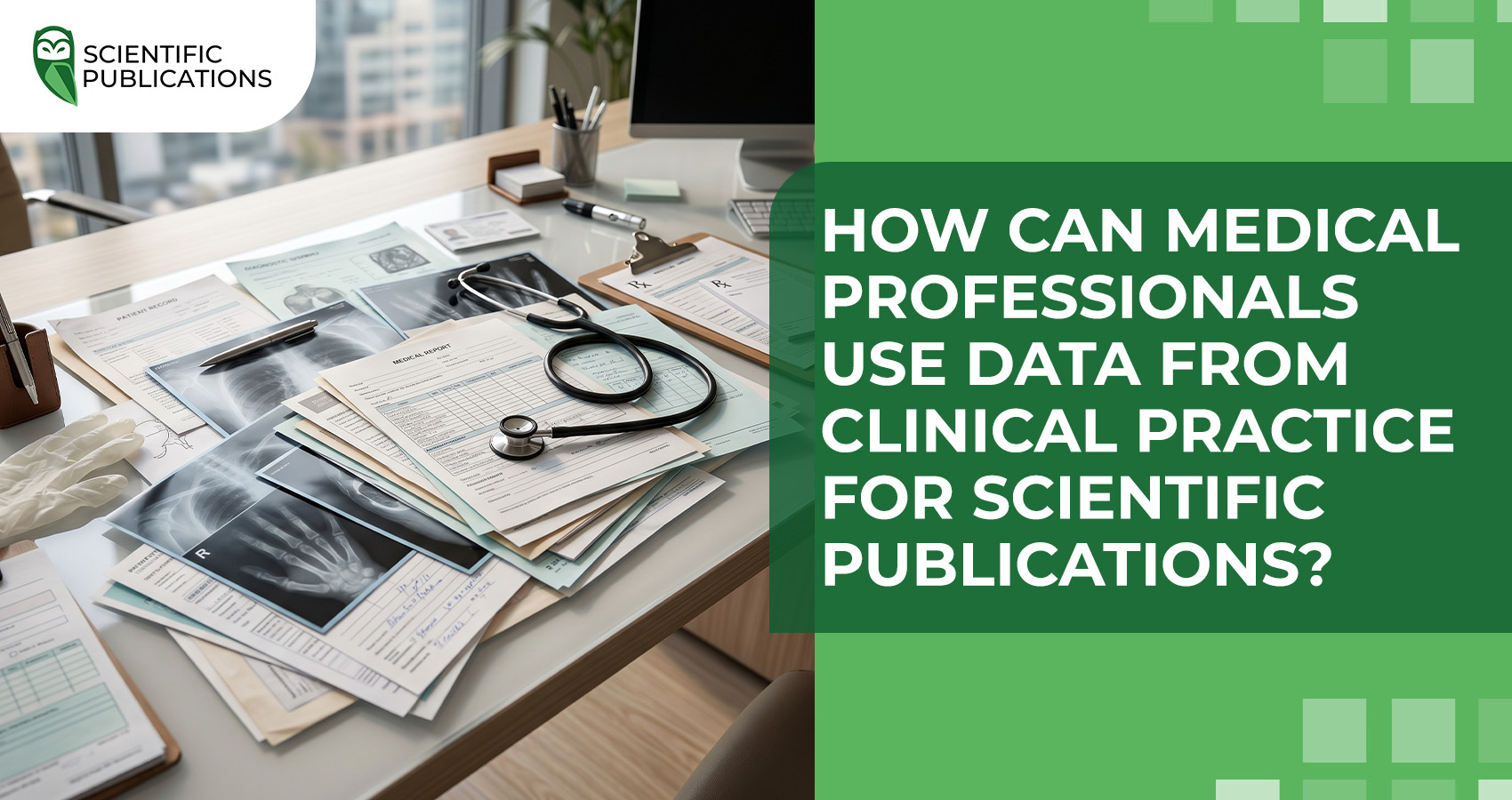
What data from clinical practice can be used?
Different types of clinical data can be used for a scientific publication, for example, a description of an individual clinical case, patient treatment outcomes, a retrospective analysis of medical records, or observation of the effectiveness of a particular method of therapy or diagnosis.
It is important that such data have scientific value, namely that they demonstrate a rare case, an atypical course of a disease, a new approach to treatment, a practical problem or results that may be useful to other specialists.
Next, we will consider the aspects that should be taken into account when preparing a scientific publication based on clinical data.
Compliance with ethical requirements
Before using clinical data for an article, the researcher must make sure that their use does not violate patients’ rights. Particular attention should be paid to confidentiality, anonymisation of information and, if necessary, obtaining informed consent.
If the publication contains data by which a patient can be identified, for example photographs, images, a detailed description of a rare case or specific clinical circumstances, it is necessary to obtain the patient’s written consent for publication.
Anonymisation of clinical information
When preparing an article, patients’ names, medical record numbers, exact addresses, contact details or other information that makes it possible to identify a person must not be used. Dates, images, examination results and descriptions of unique clinical situations should also be handled carefully. Even after a patient’s name has been removed, they may remain recognisable, so anonymisation must be as thorough as possible.
Choosing the format of a scientific publication
The format of the article depends on the nature of the available data. If it concerns one interesting or rare case, it can be presented as a clinical case. If there are several similar observations, the format of a clinical case series may be appropriate.
If a medical professional analyses a larger body of data from medical records, this may be a retrospective or observational study. In this case, it is important to clearly formulate the aim, data selection criteria, analysis methods and the results obtained.
Preparing data for publication
Before writing the article, it is worth systematising the available data: defining the research question, selecting relevant clinical materials, checking the completeness of the information, anonymising the data and assessing whether they are sufficient for well-founded conclusions.
It is also important to separate clinical observations from subjective assumptions. A scientific publication must be based on facts, clear methodology and correct analysis.
Approval by an ethics committee
If the publication involves a systematic analysis of patient data, a study of treatment outcomes or the use of medical records, it is worth finding out in advance whether approval by an ethics committee is required.
The presence of such approval may be a mandatory requirement of the journal, especially if the research involves humans or the analysis of personal medical data.
Requirements of scientific journals
Before submitting an article, it is necessary to carefully familiarise yourself with the requirements of the chosen journal. Different publications may have separate rules regarding clinical cases, informed consent, ethical approval, article structure, formatting of tables, images and the reference list.
Compliance with these requirements increases the chances of successfully passing editorial screening and peer review.
Clinical practice data can become the basis of a high-quality scientific publication if they are properly collected, analysed and presented. For a medical professional, it is important not only to present their own professional experience, but also to ensure the ethical nature of the study, patient confidentiality and compliance with the journal’s requirements.
A responsible approach to the use of clinical data will allow doctors to develop scientific activity, increase professional visibility and contribute to the development of medicine without risk to patients or their own reputation.
Do you need help with publishing a scientific article in the field of medicine? The specialists of Scientific Publications are ready to provide professional support. To receive a free consultation, fill in the form below, and our manager will contact you shortly. Together towards successful publications!