Preparing a literature review involves searching for, systematising and critically analysing a significant volume of scientific publications on the research topic. Artificial intelligence tools can reduce the time spent on routine tasks – finding sources, summarising articles, and initial text editing. However, using such technologies requires a scientist to understand their capabilities and limitations, as well as to comply with journal requirements on transparency in the use of AI.
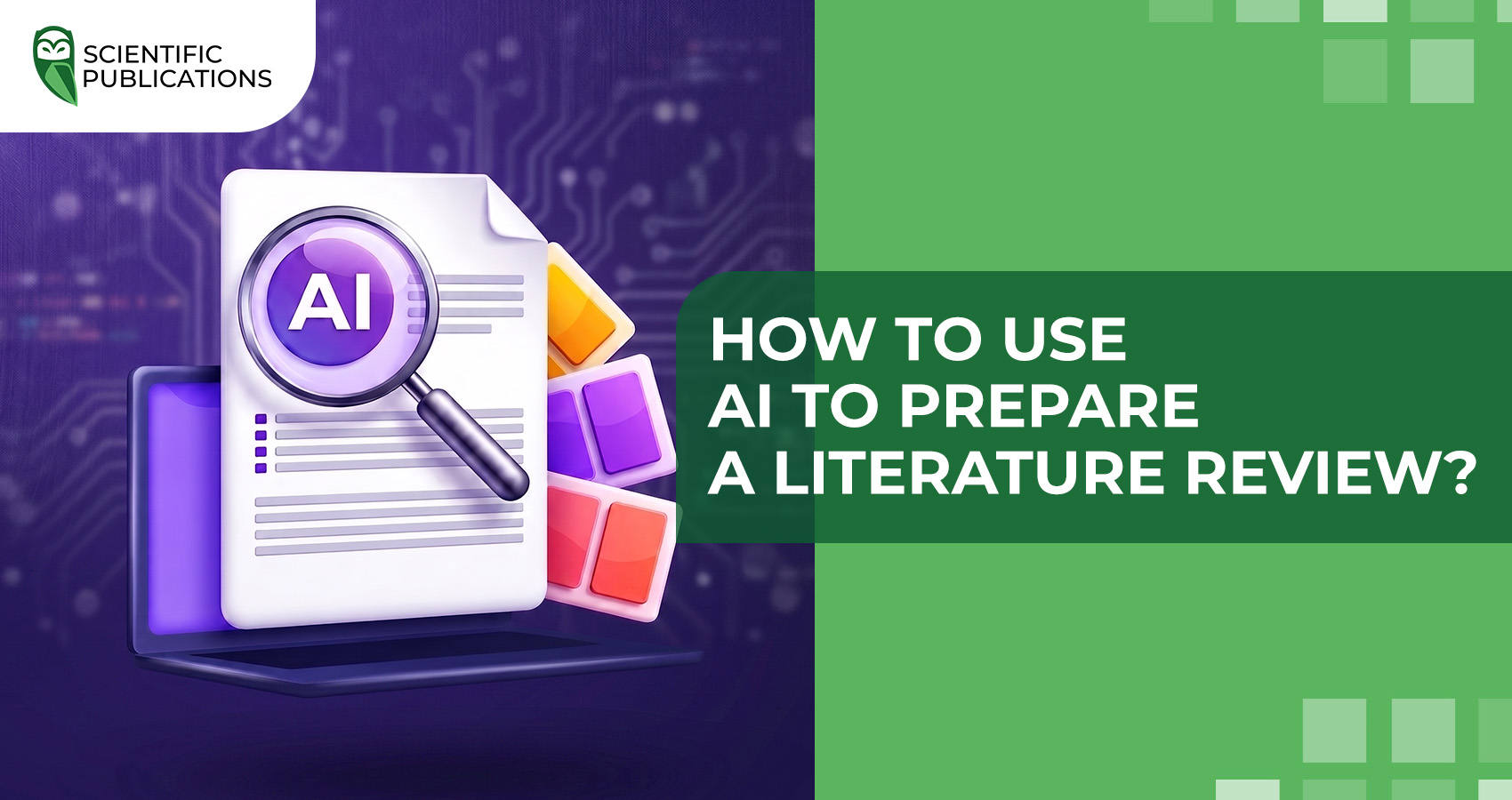
Why should a scientist use AI to prepare a literature review?
A literature review requires considerable time, as a scientist needs to study and compare dozens of publications on the topic. Artificial intelligence tools can speed up certain stages of this work. Among the main tasks that AI can take on are the following:
- Searching for and initially selecting sources. AI services process large volumes of publications and find materials relevant to the research topic within a short time.
- Systematising and comparing data. These tools make it possible to compare the methodology, sample and results of different studies in a structured format.
- Summarising the content of articles. Artificial intelligence helps condense lengthy texts into key points for a quick initial review of the source.
- Identifying gaps in the existing research. Analysing a body of publications helps reveal areas that have not yet received sufficient scientific attention.
- Editing and structuring the text. AI tools are used to check grammar and bring the text in line with a journal’s requirements.
Risks of using artificial intelligence in a literature review
Using artificial intelligence in a literature review carries certain risks. Some systems can generate non-existent references or misrepresent the content of original publications, so every fact, quotation and bibliographic entry must be checked against the primary source. In addition, AI tools cannot serve as an independent source of scientific information and should not be listed in the reference list. Confidentiality deserves particular attention – uploading unpublished data or materials covered by confidentiality agreements to publicly available services may breach the terms of such agreements.
How can mistakes be avoided when using AI in scientific work?
To minimise possible risks when working with AI tools, a scientist should follow several rules:
- checking every fact, quotation and reference against the primary source
- not naming artificial intelligence as an author or co-author of the work
- recording how the AI tool was used within the text of the article
- not uploading confidential or unpublished data to publicly available services
- retaining final responsibility for the content and conclusions of the review
Requirements set by scientific journals for the use of AI
In early 2026, the International Committee of Medical Journal Editors (ICMJE) updated its recommendations and added a separate section on the use of artificial intelligence in the preparation of publications. According to this document, AI tools cannot be named as an author, since they cannot take responsibility for the content of the work. Authors are required to disclose which tool was used and at what stage of preparing the article. A similar position is held by the Committee on Publication Ethics (COPE). Scientific journals, including those published in Poland, are increasingly incorporating such requirements into their editorial policies, so it is important to review the current rules of a specific journal before submission.
A literature review remains one of the most time-consuming stages of scientific work, and artificial intelligence can ease certain elements of it – finding sources, summarising content and initial text editing. At the same time, responsibility for the accuracy, completeness and scientific validity of the review rests with the scientist. Careful checking of data and compliance with a specific journal’s requirements make it possible to use the capabilities of AI without risking the quality of the work or the author’s scientific reputation.
Need help preparing and formatting a literature review for a scientific article? Specialists from Scientific Publications will help edit the text, format the reference list and select a suitable journal for publication. To receive a free consultation, fill in the form below, and our manager will contact you shortly. Onwards to new scientific achievements!