


Indexing, that is coverage of publication materials by one or another database, is one of the key characteristics when evaluating the influence of a scientific journal. Researchers should pay special attention to this, because the realization of scientific purposes directly depends on the indexing, and in some cases it can also indicate the unconscientiousness/conscientiousness of the publication. Therefore, the “Scientific Publications” Company offers to consider in detail how to check whether a journal is included in Scopus and Web of Science, as well as to analyze the indexing process in MEDLINE, PubMed and PubMed Central.

How to check if a journal is in the Scopus database?
Before the publication will be indexed in the Scopus database, it goes through a complex system of analysis. At the first stage, the minimum necessary criteria are checked:
- Compliance with publication ethics.
- ISSN availability.
- Accessibility to the international scientific community.
- Adherence to clear rules regarding the content selection.
Subsequently, the publication is evaluated by the Content Selection and Advisory Board regarding the publication’s policy, its content, reputation, regularity, etc.
Exclusion of journals from the Scopus database was previously carried out on the basis of annual analytics, but now the updates are made every month. Therefore, it is necessary to constantly monitor the indexing of scientific journals.
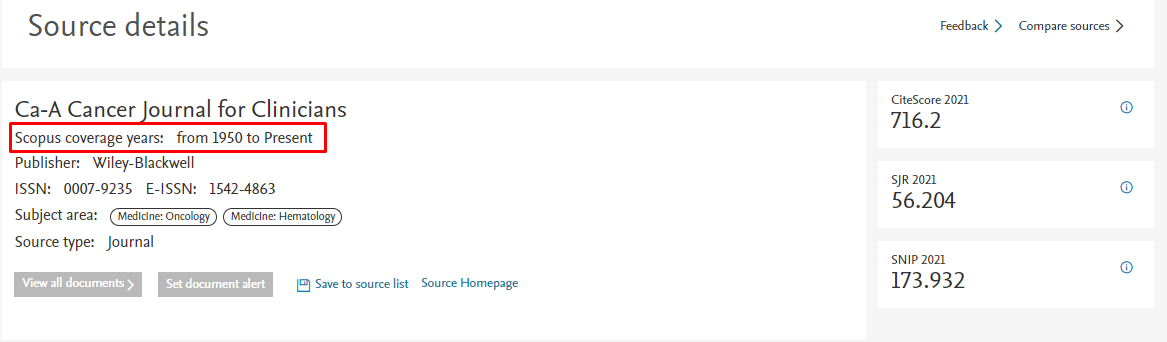
Search for the journal that you are interested in and pay attention to the “Scopus content coverage” column. If the publication is indexed in the database, it will contain the designation “to Present”. If the page of the journal shows “coverage discontinued in Scopus”, indexing has been terminated. If the user cannot find a publication in the database, then most likely there is no such journal or it has never been included in Scopus.
It should be noted that sometimes the years of materials coverage may differ from the actual coverage period:
- If the journal indicates the indexing period prior to 2004 (that is before the Scopus database launch), that means that the content selection specialists have decided to include previous publications of the journal. A similar situation may arise with other coverage periods (for example, the publication was included in 2022, but the indicated indexation period is from 2018).
- Sometimes the end year of the indexing termination is not an indication of automatic exclusion from the published material database. For example, the journal lost its indexing in 2018, but the “Scopus content coverage” section contains materials dated 2019. This means that some later works continue to be indexed.
How to check if a journal is in the Web of Science database?
The selection process of scientific publication for Web of Science includes even more complex structure than in Scopus. The Clarivate company has formed 28 compliance criteria, among them 24 are quality indicators and 4 are influence indicators.
If a scientific journal passes the quality parameters check, but not influence, it is accepted for indexing, but in the so-called “incubator” - ESCI, this index covers mainly young, but promising scientific journals.
If the publication meets the requirements of all 28 criteria, it is included in one of the main citation indexes: SCIE, SSCI, AHCI.
Journals can be moved from one category to another based on the results of repeated checks of their influence.
Publications exclusion is also carried out in accordance with an even stricter principle, full-time specialists can at any time initiate the publication check and exclude it from the database in case of non-compliance.
You can check the indexing in Web of Science through the Master Journal List.
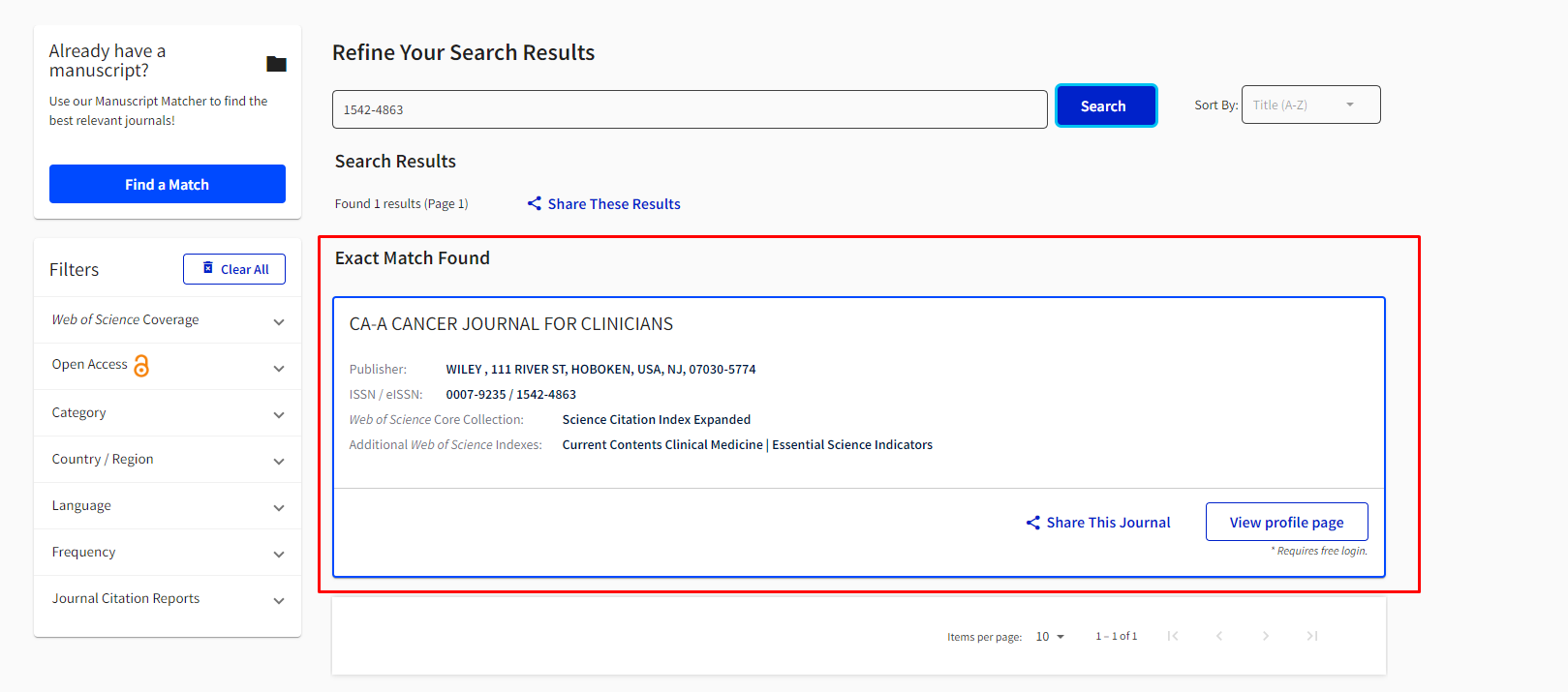
The search principle is very simple: if the journal is not included in Web of Science, it will not be found through this service.
Indexing in MEDLINE, PubMed and PubMed Central
MEDLINE, PubMed and PubMed Central are among the central platforms for hosting high-quality medical scientific materials.
- MEDLINE is a database of the National Library of Medicine, which includes more than 5,000 scientific publications. Journals are included in the database three times a year based on the results of consideration by the relevant Committee. The review process for each publication takes 5-6 months (+2 until the publishers are notified).
- PubMed is a platform that contains 34 million peer-reviewed medical materials. The basis of the PubMed is the MEDLINE database.
- PMC (PubMed Central) is a free archive of full-text medicine materials.
You can check the journal indexing in MEDLINE or PubMed on the page of the National Library of Medicine by searching for a publication by name or ISSN from the NLM Catalog (MEDLINE) or PubMed list.

Pay attention to the “IN” and “Current Indexing Status” tabs.
Why should you check the indexation?
If a publication in a publishing that is indexed in a specific database is necessary for the realization of a scientist’s scientific purpose, the further career of the scientist directly depends on the indexing verification. There are cases when:
- The information in the databases or on the websites of publications does not have time to be updated.
- The journal intentionally does not indicate the fact that indexing has been terminated.
- The publication was recently excluded and the researcher did not pay attention to it.
As a result, improper indexing checks can cost the researcher wasted time and money. Therefore, this aspect is one of the basic ones in the process of planning and writing a scientific article.
If you need assistance in a journal for publication and checking its main scientometric characteristics, please contact the “Scientific Publications” Company. Choose the complex service “Publications in Scopus” or “Publications in Web of Science” and our specialists will provide full support for your scientific work at all stages of the publication process!
We will be glad to cooperate with you!


