Citation is one of the main metrics in the scientometrics world. The number of citations of the author’s scientific works directly depends on his popularity, authority and significance. Researchers who seek to develop and reach new career peaks should pay attention to the indicators of this metric and features in working with the largest international Scopus and Web of Science databases.
What is a citation index?
The “citation index” usually means the sum of citations, this indicator is calculated both for the author and for each individual work. If a scientific article is written in co-authorship, each mention of the work is counted for all authors.
The term “citation database”, which denotes a platform for calculating of scientometric indicators (Scopus, Web of Science), should be also distinguished.
When working with citation, you need to understand the features of each platform.
Scopus citation index
As it was mentioned earlier, “document citation index” and “author citation index” should be separated.
Scopus document citation index
For a more detailed introduction to this metrics type, a researcher should find a document in which he is interested in the scientometric database. What to pay attention to? The page will display a large amount of useful information about authors, editions, access type, main identifiers, etc.
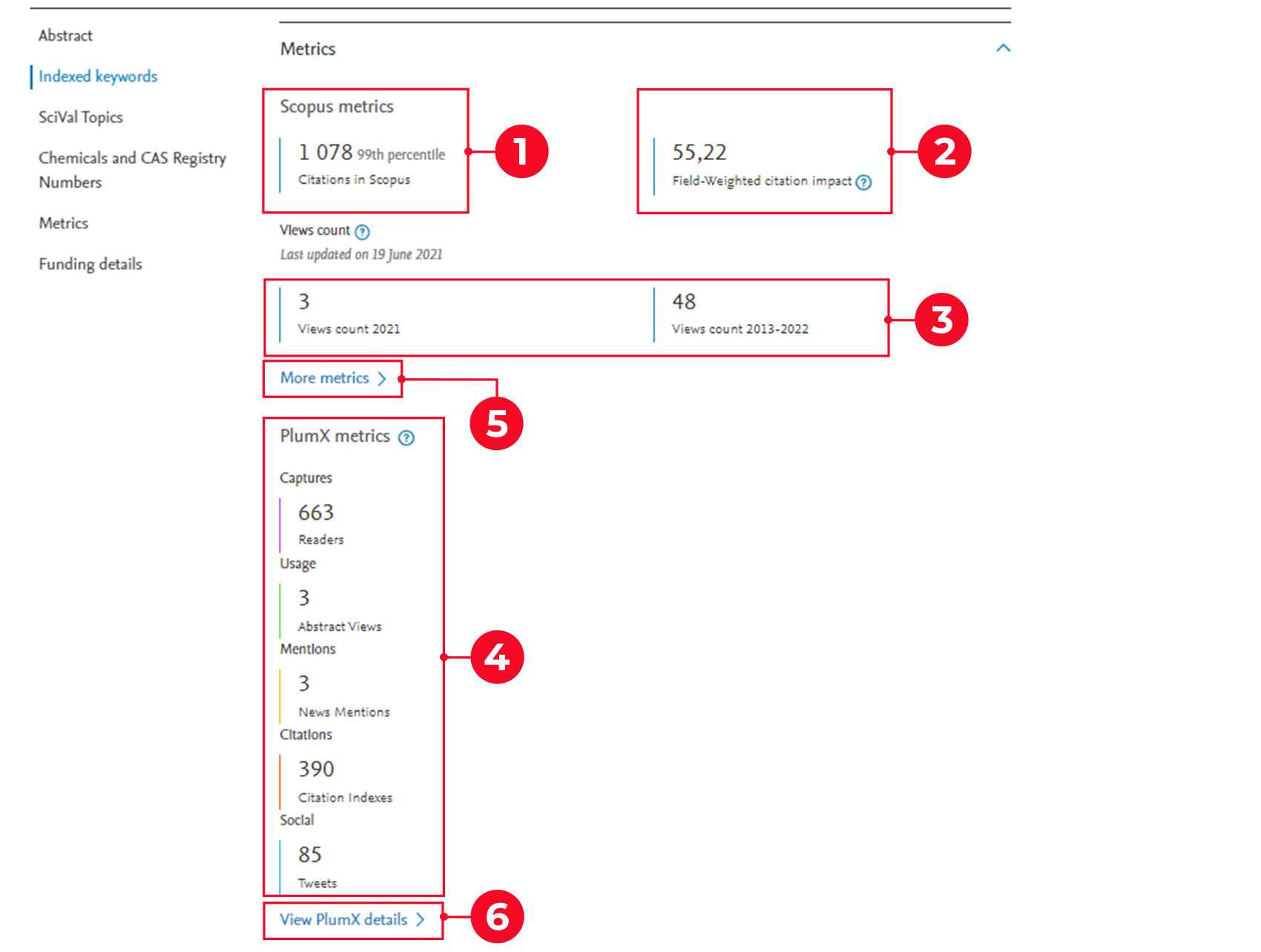
In the citation context, the “Metrics” tab attracts the most research attention:
- The total citations number with percentile indication.
- Field-Weighted Citation Impact is a metric that indicated the citation and popularity of the work in comparison with similar ones in the same subject area.
- Views number.
You should also pay attention to the PlumX(4) altmetrics tab. This indicators type is not considered a purely scientometric type and cannot be compared with it, but it largely affects the popularization of the work. Mentions in blogs and social networks can be important in further increasing of citations and other scientometric indicators.
You can learn more about the citation parameters and altmetric indicators for each work with the use of the “More metrics: (5) and “View PlumX details” (6) tabs, respectively.
Author citation index in Scopus
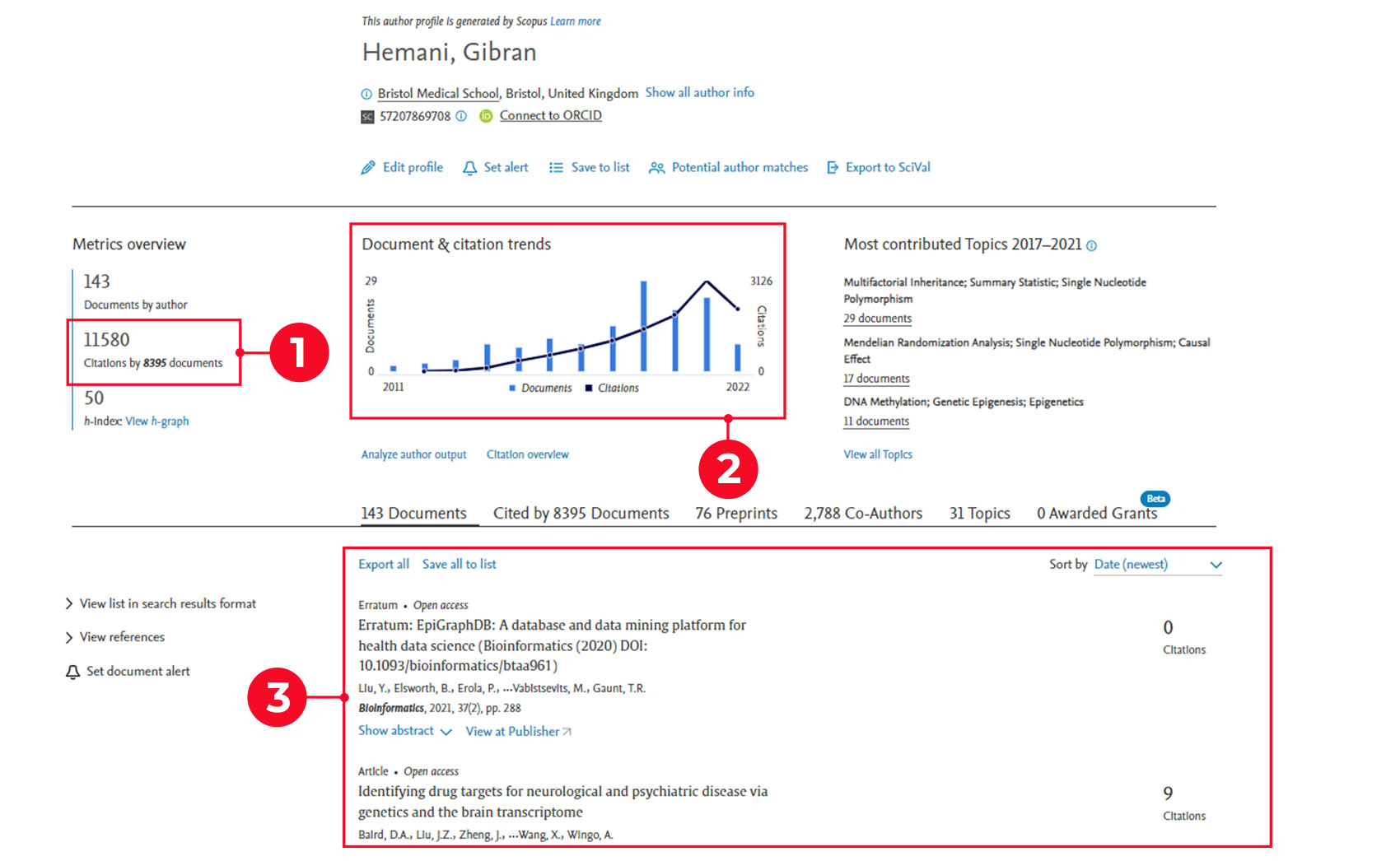
The Scopus author profile contains the most important information about the researcher. In the context of citation it is:
- Number of citations of all works of the author.
- Citations dynamics by year
- Number of citations of each scientific article.
More detailed information can be found on the “View h-graph” tab.
Web of Science citation index
Web of Science document citation index
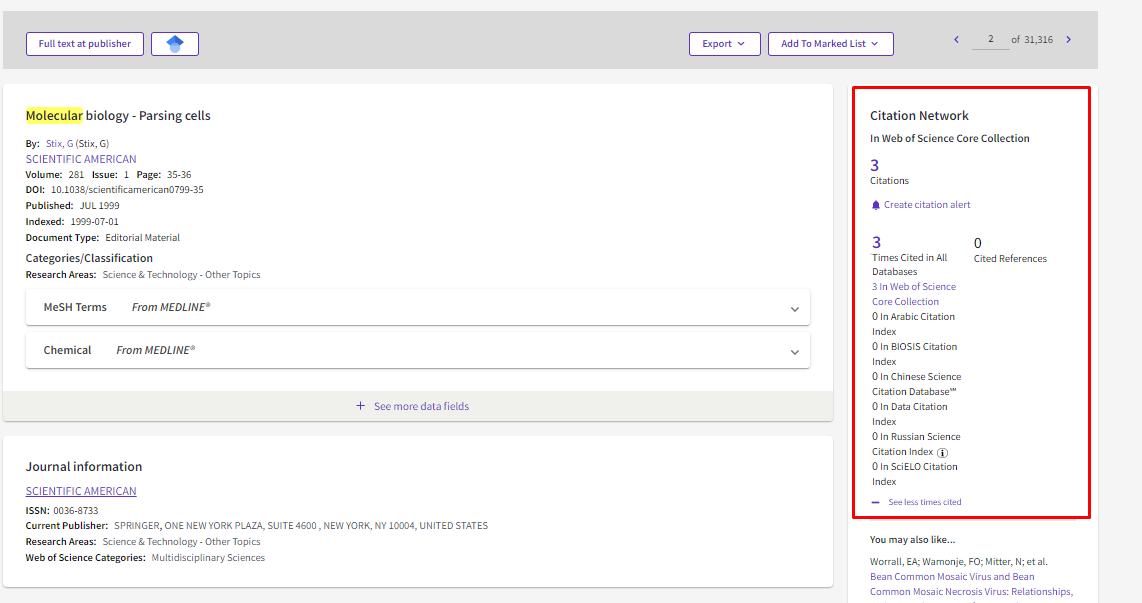
For each indexed document in this database, the number of citations and their distribution by collections and indexes is calculated on the “Citation Network” tab.
Web of Science author citation index
The Web of Science author profile provides an in-depth analysis for citation parameters. For example, the “Metrics” tab contains information about:
- Total number of citations.
- Scientific works where the scientist is cited.
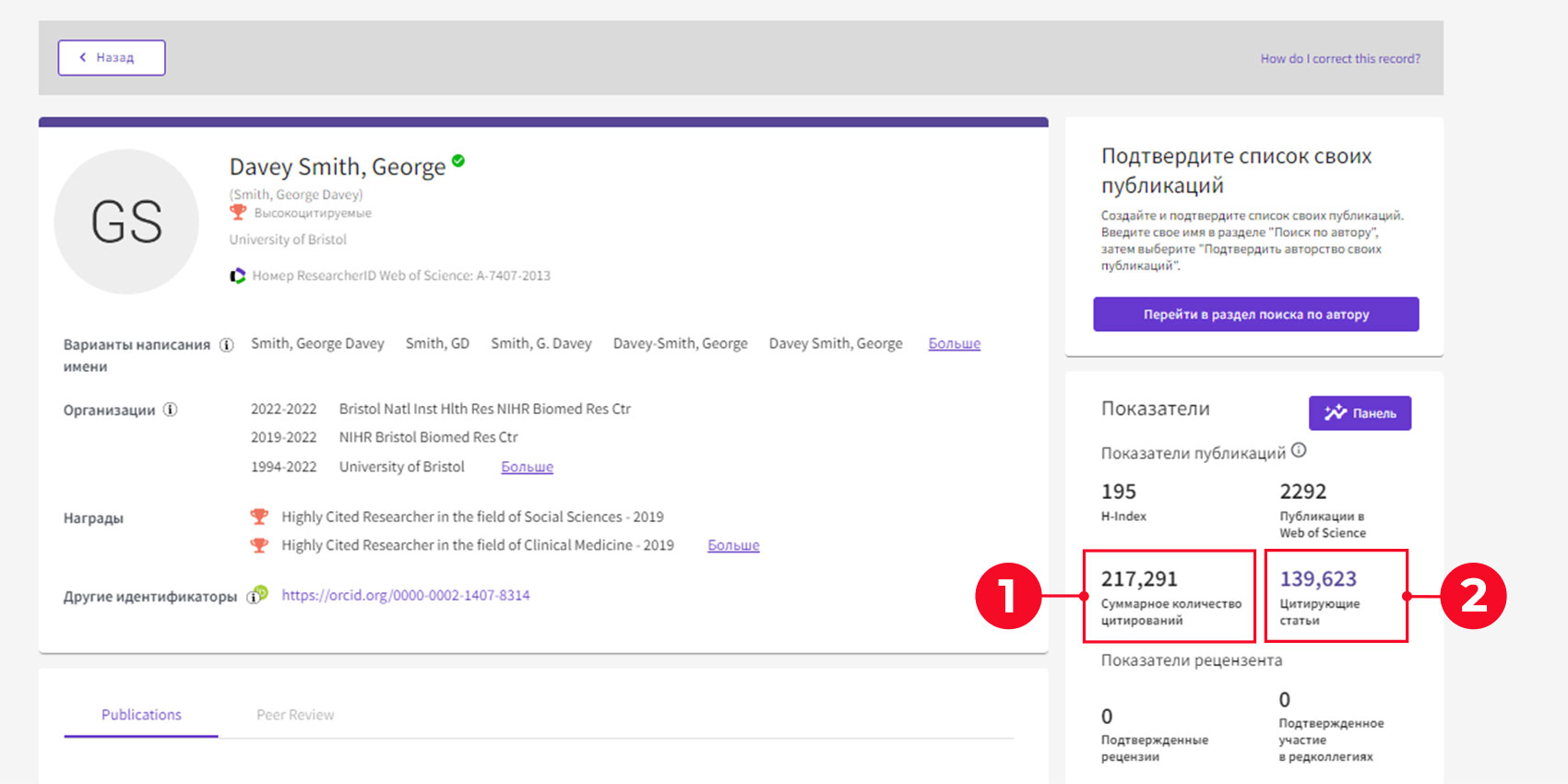
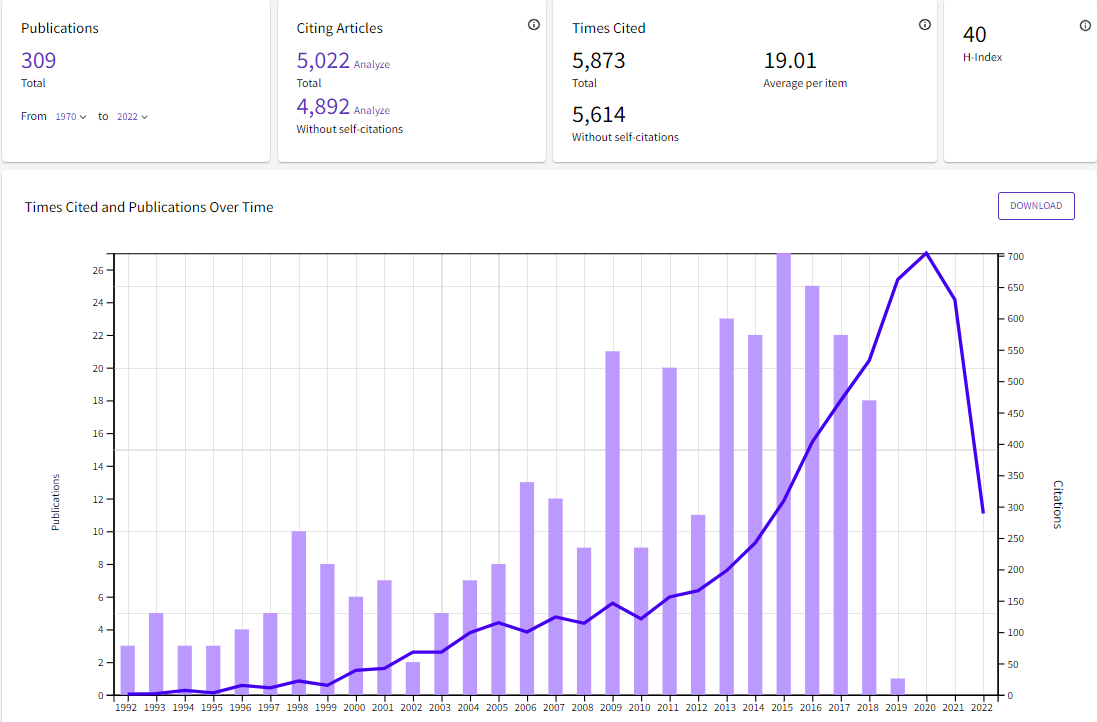
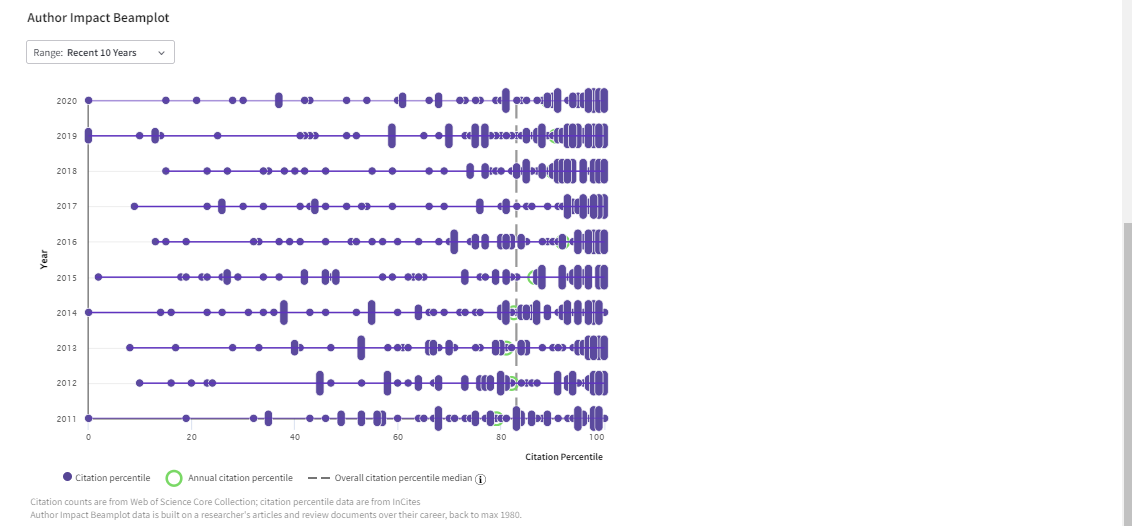
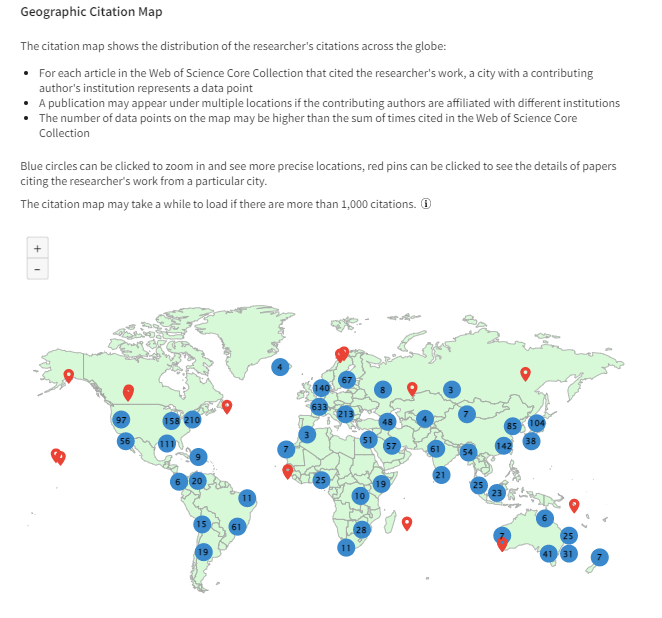
In to familiarize yourself with more detailed metrics, you should to go to the “Dashboard” panel, it contains a lot of valuable information for the scientist regarding:
- Citation diagram by year
- Author impact with percentile selection
- Geography of the researcher scientific works citation
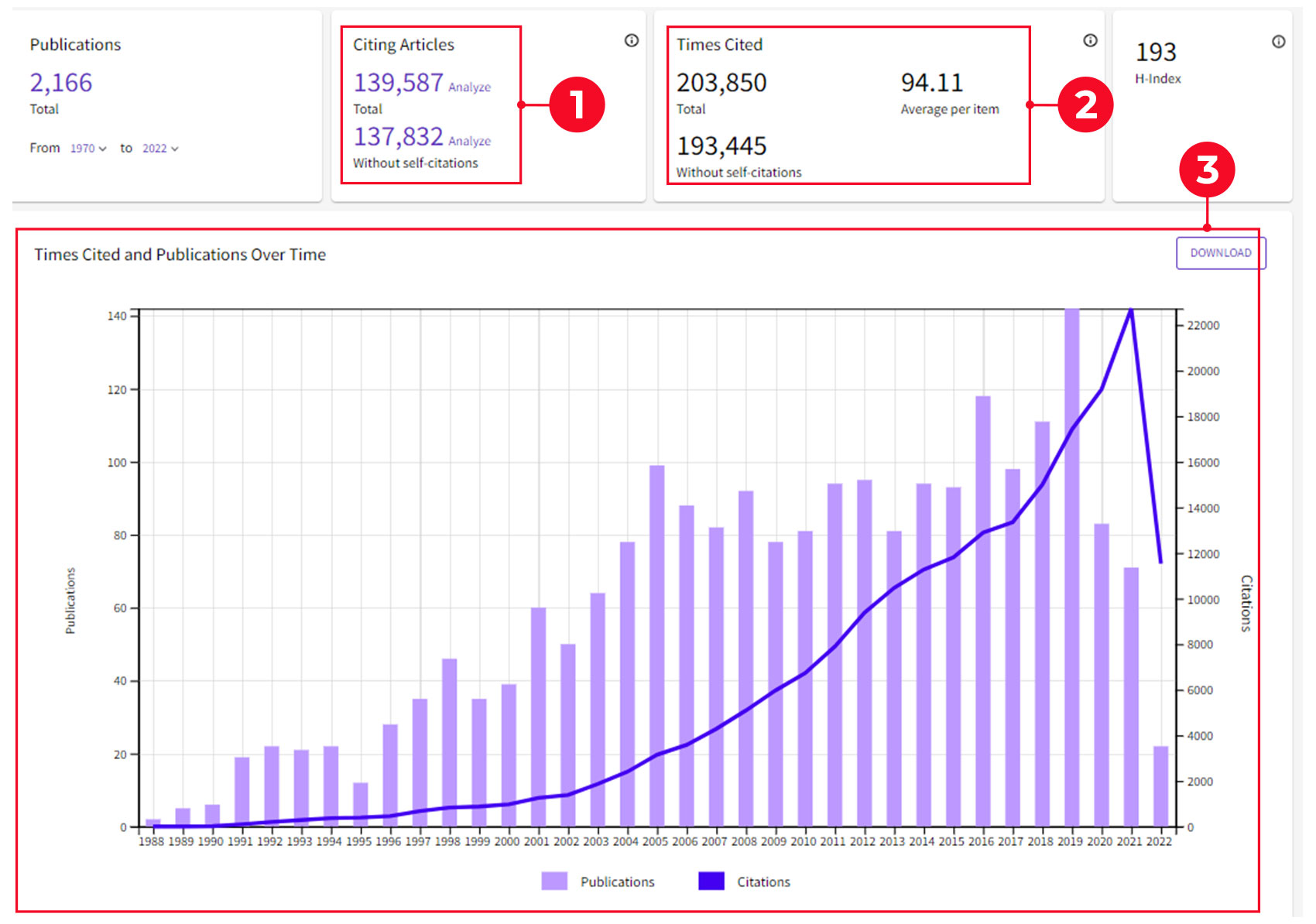
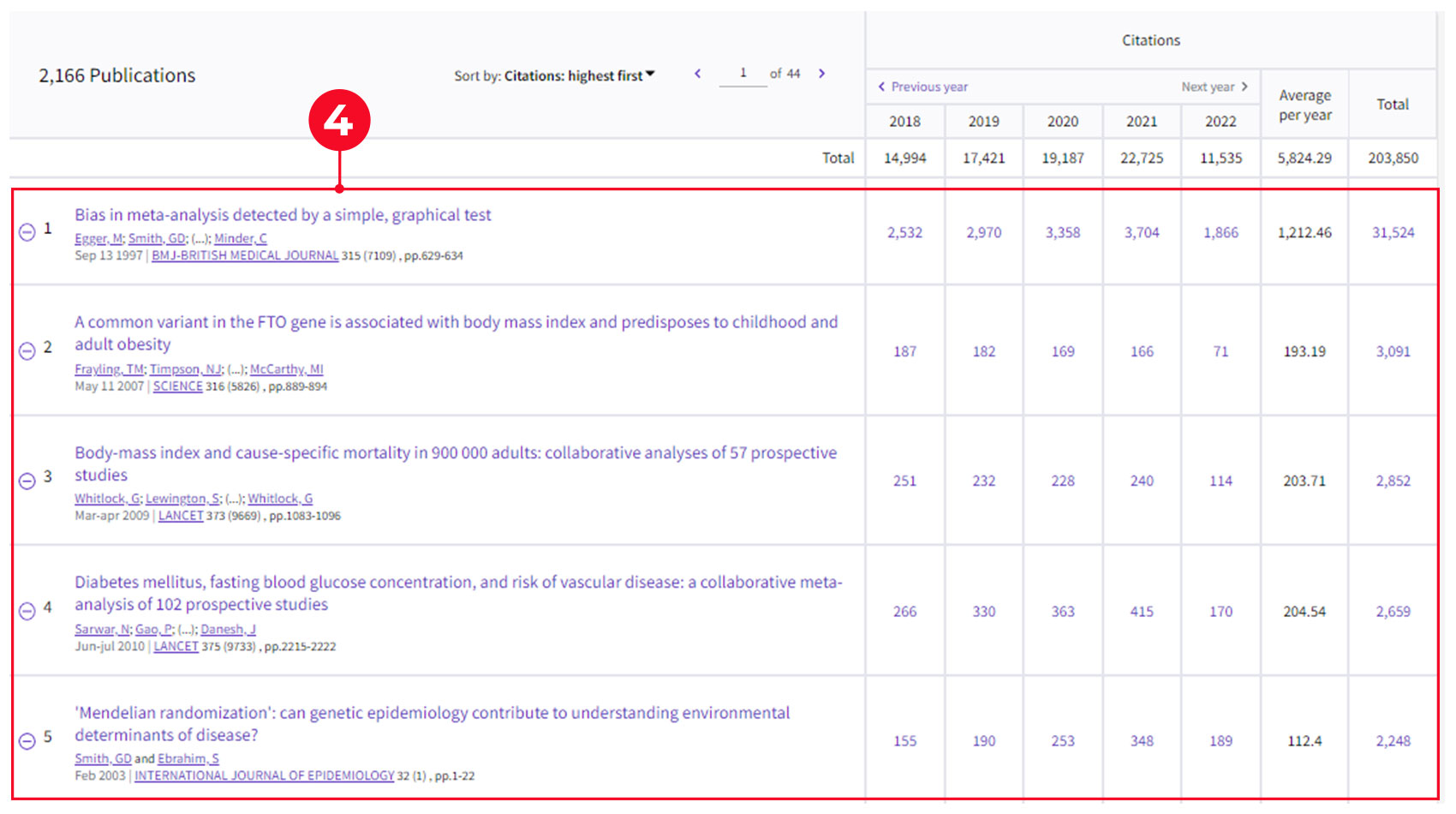
Besides, in the “Dashboard” panel there is an opportunity to generate a Citation Report, which indicates:
- Total number of cited publications (with and without self-citation).
- Total number of citations (with and without self-citation).
- Citation diagram by year.
- Number of citations for each individual scientist publication.
Also, citation indicators are taken into account at the journals level within the Scopus and Web of Science databases, based on which all the most important publication metrics are calculated: quartile, percentile, SNIP, SJR, CiteScore, impact factor. This issue requires separate consideration.
Self-citation and self-plagiarism: is there a limit?
Self-citation, that is, the author reference to his own previous works, is not considered a violation of publication ethics, you should not overuse it. Self-citation is allowable when the author compares his works or continues a scientific opinion, but not at all in the case of improperly increasing the number of citations.
For example, 23 citations are required to obtain the degree of habilitated doctor, 3 of which are attributed to permissible self-citation. That is, self-citation at the level of 12-13% is considered acceptable.
Self-plagiarism is a gross violation of publication ethics. This term refers to the use of parts of the scientist’s previous works in a new article without reference to them. Self-plagiarism aims to unfairly minimize the researcher’s efforts.
Even with self-citation, you should follow the general rules for the drawing up of scientific work.
If you need assistance in increasing citation indicators within the Scopus and/or Web of Science databases, please contact the specialists of the “Scientific Publications” Company. We have experience in the implementation of the most complex publishing projects and will promptly provide you with expert advice!