Among the vast number of scientific journals, there are so-called predatory journals that engage in unscrupulous publishing practices. They position themselves as reputable, but they are not. The medical industry is no exception, and publishing in a predatory journal poses a danger to professionals in this field. In our article, we will talk about how to recognise a predatory journal and avoid publishing in it.
What are predatory journals?
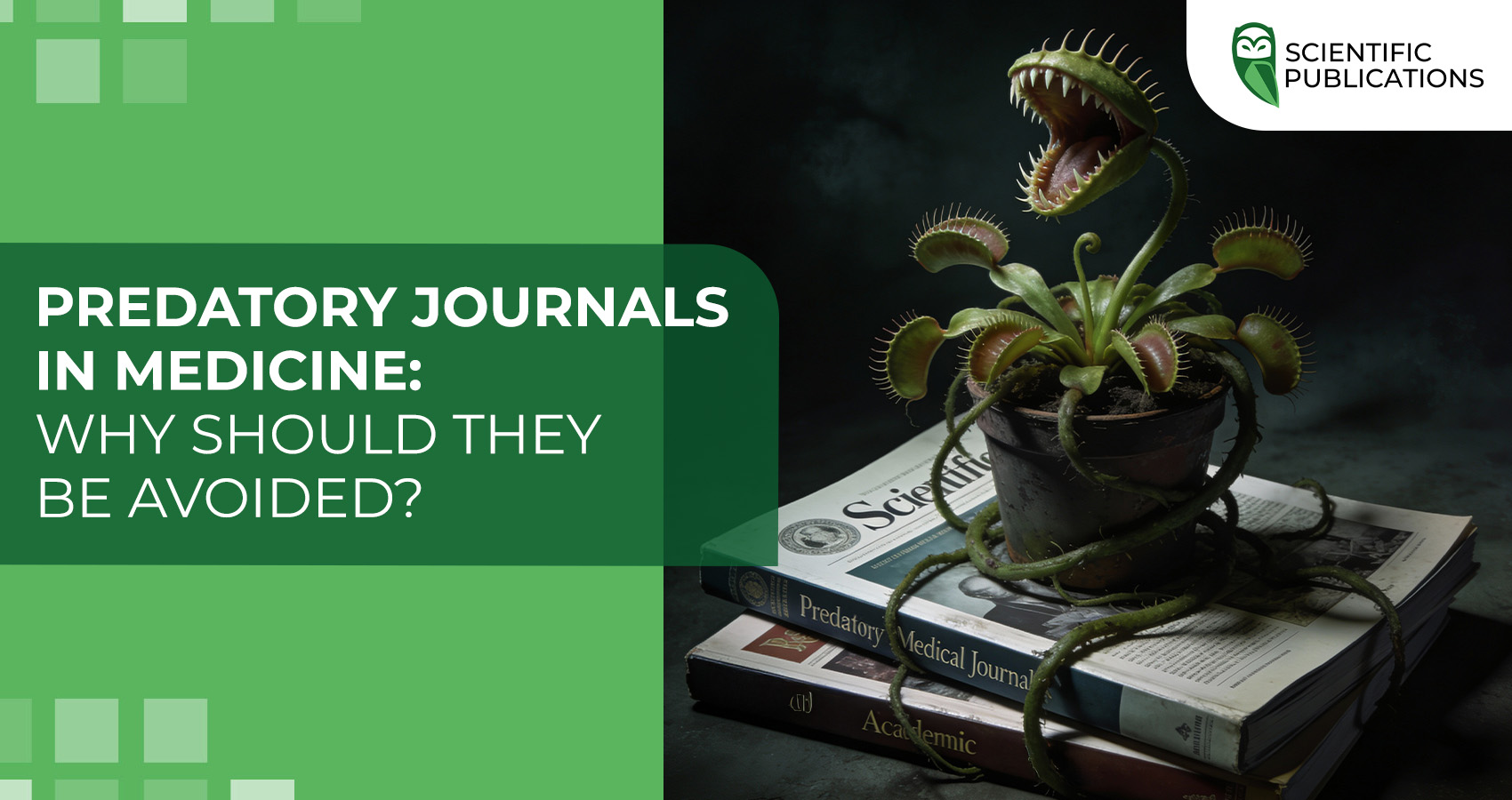
Predatory journals are unscrupulous scientific journals that position themselves as prestigious journals but do not comply with quality standards and publication ethics. The main goal of such journals is to receive payment for publishing articles, but they do not adhere to the principles of academic integrity. Such journals mislead researchers, especially those who are just starting their publishing activities, and also slow down the development of science.
Types of predatory journals
Predatory journals are divided into three main categories:
- Fake journals – pseudoscientific journals that position themselves as genuine by imitating publishing activities. Such journals provide unreliable scientometrics indicators in order to attract researchers for profit.
- Predatory journals – journals that once had authority among the scientific community and were indexed in prestigious databases. However, due to violations of academic integrity and a number of other reasons, they have lost their status.
- Clone journals – journals that copy the websites, names, etc. of other journals in order to charge for publication. However, they either do not carry out the review process at all or do so only formally.
What are the signs of a predatory publication?
1. Aggressive publication policy
This usually manifests itself in letters sent by the publication to scientists inviting them to publish or join the editorial board, which is a clear sign of a predatory publication. The lack of specifics regarding manuscript requirements, the review process, and a clear emphasis on the contribution for processing the article are additional signs of a predatory publication.
2. Fast review process
If a journal promises unnaturally fast review times, such as a few days or weeks, this is a clear sign of dishonesty. Typically, the review process takes up to 1 month on average in a standard publication. In a reputable scientific journal indexed in the Scopus or Web of Science database, peer review takes an average of 4 to 6 months, or even longer.
3. Excessive publication fees or lack of information about them
Unscrupulous journals may charge unreasonably high fees for publishing an article or conceal information until the work is accepted. Reputable scientific journals provide information about publication fees on their official websites, and researchers can freely access this information before submitting an article.
4. Unscrupulous publishing practices
Predatory journals often publish low-quality material, delay issues, or do not include certain articles at all. Moreover, such issues may contain articles that do not correspond to the stated subject area of the publication.
5. Broad coverage of topics
If a journal publishes articles from different fields of science, this may indicate its dishonesty and predatory status, as this attracts a larger number of authors. However, such journals do not contribute to the development of science and cannot ensure a high-quality review process for scientific articles in different fields.
6. Low quality of the journal's website
Particular attention should be paid to the quality of the publication's official website, the availability of all necessary information, and the accuracy of the contact details provided. In addition, it is necessary to check the journal's archives for the availability of data on issues (number of articles, publication dates since the launch of the publication, authors, etc.). The absence of an archive or its disordered design may indicate a predatory publication.
How can you check the predatory status of a publication?
The list of predatory journals can be checked using a special resource for researchers – Beall's List, which contains journals that do not provide quality editorial services. In addition, you can find potentially predatory journals excluded from the Scopus database in our monthly column. You can find the latest list of excluded journals in our article.
Publication in a high-quality scientific journal is critical for the visibility of research, the reputation of the scientist, and the development of their career. It confirms the reliability of the results, the scientist's adherence to the principles of academic integrity, and builds trust among the scientific community.
Having trouble choosing a scientific journal? To avoid publishing in a predatory journal, contact Scientific Publications. Our specialists will select a high-quality scientific publication and accompany your work until its successful publication and indexing. To learn more about our services, fill out the form below and our manager will contact you shortly. Together towards successful publication!