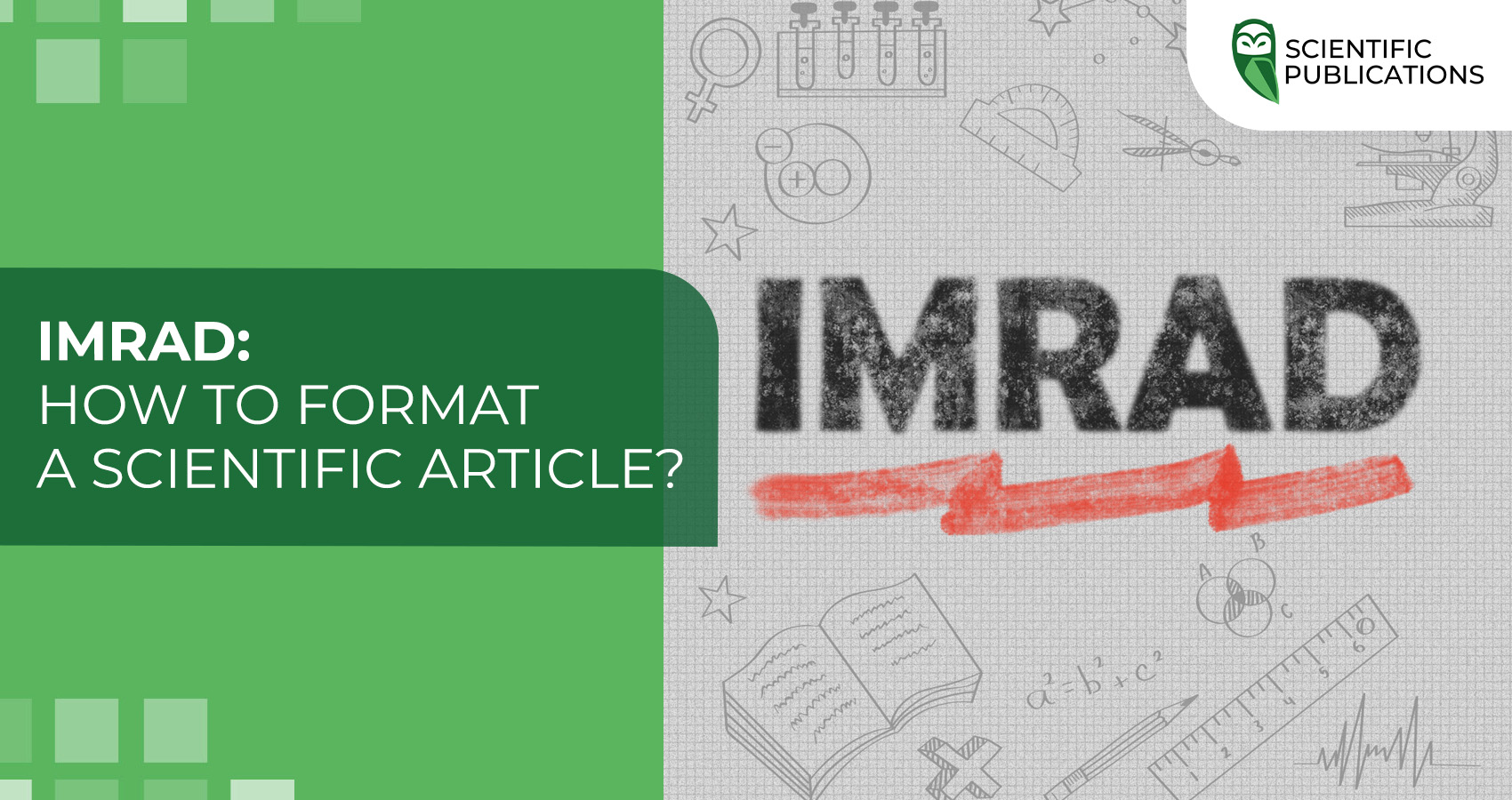
Preparing a scientific article is a responsible process that requires special attention and is an important stage in the work of a scientist. Its correct formatting is one of the main criteria when checking by the editorial board of the publication. The most common structure of a scientific article, which is required by the vast majority of scientific journals, is IMRAD. In today's article, we will look at how to format your work correctly according to this structure and what to pay attention to.
Why is it important to format a scientific article correctly?
When reviewing a paper, the reviewer first pays attention to its formatting. If it does not meet the journal's requirements, the study risks being sent back for revision, which can significantly delay the publication process, or even be rejected. Proper formatting of a scientific article demonstrates the author's responsible attitude and familiarity with the publication's standards. In addition, a correctly formatted text facilitates the perception of information, speeds up the review process, and increases the chances of successful acceptance of the work.
Common requirements of scientific journals for the formatting of scientific articles
- academic translation into a foreign language
- clear structure of the work (mainly IMRAD)
- correct citation of literature (APA, Chicago, Vancouver, etc.)
- standardised formatting of tables, figures, diagrams, etc.
How to format an article according to the IMRAD structure?
As we mentioned above, most scientific journals prefer the IMRAD structure (Introduction, Methods, Results, Discussion). This structure consists of the following sections:
- Introduction. This section should reflect the relevance of the topic and the research problem. It is also necessary to provide a description of the hypothesis and scientific novelty. However, do not overload the section with a literature review; it should be relevant and consistent with the content of the study. If there are a significant number of literary sources that are important for the study, analyse them in an additional section entitled ‘Literature Review,’ which is placed after the Introduction.
- Methods. In this section, you should describe the methods, approaches, and materials used in the research. You should also indicate the literature base of the research. Indicate the statistical data used and the ethical standards that were followed.
- Results. This section should be formatted in accordance with the methodology and results obtained. It would also be advantageous to use graphic materials (tables, diagrams, figures, etc.) in this section, as this will improve the perception of information.
- Discussion. In this section, you need to conduct a comparative analysis of the results obtained with the results obtained by other researchers who have studied a topic similar to yours. It is necessary to compare the methods used, the data obtained, etc., as well as to identify directions for further research.
Following this structure will help to optimise the process of organising information and make it easier to navigate the text of the study.
What should you pay attention to when formatting a scientific article?
1. Scientific journal requirements
Each scientific publication has its own requirements for the formatting of submitted materials, which can be found on their official website. However, scientists sometimes disregard these requirements by using a different citation style, a different structure, or incorrectly specifying the article's metadata (abstract, keywords, etc.). For the editorial board, this is evidence of the author's lack of responsibility, and there is a high probability that the work will be rejected.
2. Citation
A common mistake among scholars is to mix different citation styles in the reference list. Most academic journals require adherence to a single citation style (APA, Chicago, Vancouver, etc.). Another problem is excessive self-citation. Some authors support individual theses with their own previous works, which is not always appropriate. Excessive self-citation reduces the scientific objectivity and uniqueness of the results, which is strictly checked by reviewers. The recommended level of self-citation is 10-12%.
3. Formatting the list of references
Common mistakes in formatting the list of sources used include the use of different formatting styles, the absence of DOIs, inaccuracies in authors' surnames, etc. In addition, scientists use outdated literature that may not correspond to the subject of the study in the modern context. For this reason, most scientific journals require that at least 50% of the bibliography consist of literature published within the last 3 years.
Proper formatting of a scientific article speeds up the review process, increases confidence in the results, and reinforces the researcher's image as a responsible scientist.
Need help publishing a scientific article? Contact Scientific Publications! We will format your research in accordance with the publication's requirements and accompany you through all stages of the process. If you have any questions, please fill out the form below and our manager will contact you shortly. Together towards successful publication!