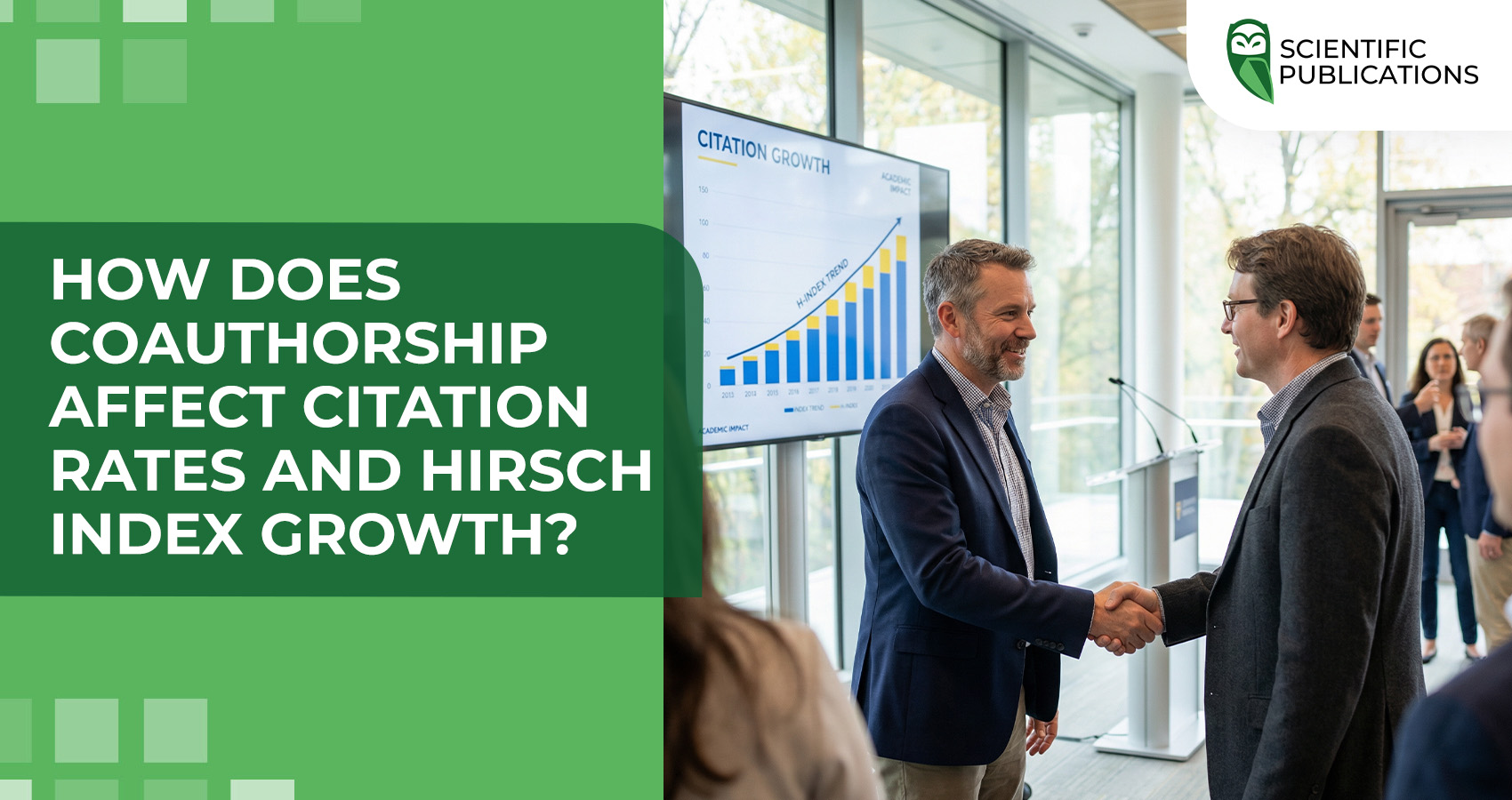
Coauthorship is one of the most popular forms of research. Collective publications have a number of advantages for scientists and have a positive impact on their scientometrics indicators, in particular on citation rates and the Hirsch index. What are the advantages of scientific coauthorship for scientists? How does it affect an author's citation rate and Hirsch index? Let's discuss this in our article.
Coauthorship and a scientist's scientometrics indicators
Coauthorship is a form of scientific collaboration in which two or more scientists work on a joint project. This research format allows scientists to produce high-quality research that will have a potentially higher chance of being cited.
Citations, in turn, influence the growth of another important scientometrics indicator for scientists – the Hirsch index (h-index). It reflects the productivity and influence of a scientist and also allows one to assess how valuable the author's work is to the scientific community.
The H-index reflects the number of publications by a scientist (h), each of which has at least h citations, and is a valuable tool for assessing a researcher's contribution to the development of science. This indicator is regularly used when making decisions about funding, academic positions, awards, etc., so working to improve it is critically important for many scientists.
How do joint publications affect a scientist's citation rate and Hirsch index?
1. Expanding the interested audience
Collective publications are often created by scientists representing different universities or institutions. In addition, each of the authors has their own interested audience (colleagues, other researchers, etc.) who are consistently interested in the scientist's work.
Involving other scientists in joint research will help each of them expand their readership. This will directly influence the growth of citations and increase the Hirsch index.
2. Improving the quality of research
Combining the experience, knowledge, and resources of several scientists has a positive impact on the quality of research. Working on a joint research project allows scientists to compensate for their lack of certain skills. For example, some researchers specialise in methodology, while others are better at conducting experiments. Combining these skills allows for comprehensive and original research that is more likely to be cited.
3. Interdisciplinary collaboration
Coauthored publications are often interdisciplinary in nature, which attracts the attention of scientists from different fields. Such publications are more often cited by scientists in works from different disciplines, which increases the citation rate and the Hirsch index of the authors, respectively.
Why do scientists need to increase their Hirsch index?
The Hirsch index is one of the most important scientometrics indicators for a scientist, allowing the value and relevance of their research to be assessed. Some of the main reasons why researchers need to increase their h-index are as follows:
- Career growth and funding. Higher education institutions, scientific organisations, and funding organisations use the Hirsch index as one of the criteria for evaluating candidates for positions, grants, or scholarships. The higher this indicator, the greater the chances of obtaining the desired position, project funding, and achieving progress in an academic or scientific career.
- Opportunities for collaboration. Scientists with a high Hirsch index are more likely to receive invitations to collaborate, which has a positive impact on their reputation and the development of their professional portfolio.
- Assessment of scientific influence and reputation. The H-index is one of the important scientometrics indicators that reflects a scientist's productivity and the scientific influence of their research.
- Publication in a prestigious journal. The editors of some authoritative scientific publications pay attention to the author's Hirsch index and their publication activity. A high h-index will have a definite advantage for the scientist and build trust from the scientific community.
In summary, coauthorship is one of the most effective ways to improve a scientist's scientometrics indicators. Collective work on research will not only contribute to the development of the researcher's international recognition and influence, but also open up a number of opportunities for their professional and career development.
Get the most out of coauthorship with Scientific Publications! Need to publish a scientific article? We will select a suitable journal and accompany your work until its successful publication and indexing. Get a free consultation by filling out the form below, and our manager will contact you shortly. Together to successful publication!