Publishing a scientific article is not only the final stage of research, but also an important step towards recognition in the scientific community. As with any other research, medical publications must also adhere to high quality standards, ethical standards, choose the right journal, etc. In this article, we have compiled the key steps that will help you go from idea to successful publication.
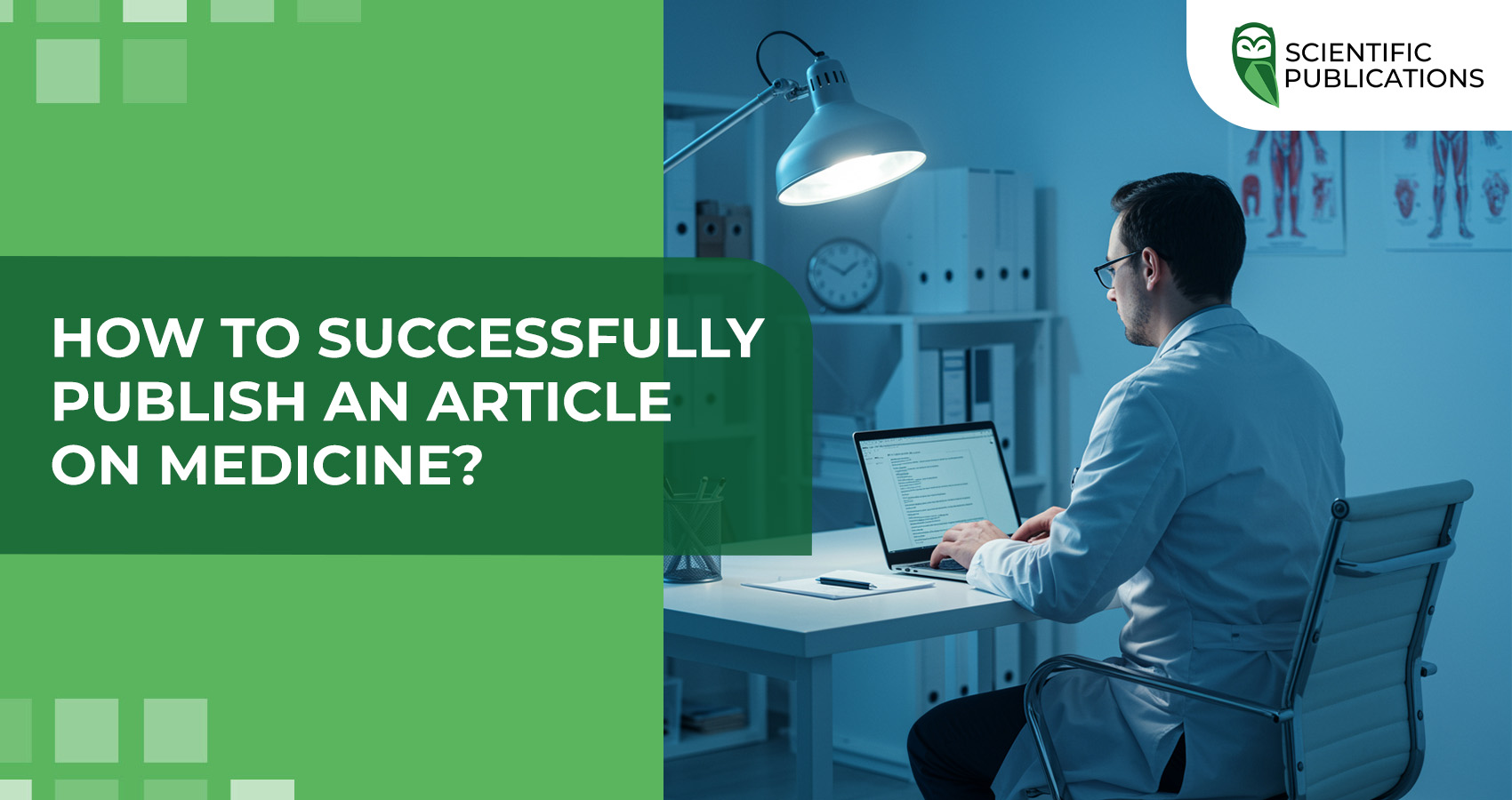
The publication of medical research is an important step that affects not only the scientific reputation of the researcher, but also the development of practical medicine. Many factors must be taken into account for an article to be accepted by a reputable scientific journal.
Choosing a topic for a medical article
To successfully publish an article on medicine, firstly, you should choose a relevant and clearly formulated topic. For example, it should be a study that solves a clinical problem or reveals a new aspect in medicine.
It is important that the chosen topic is not only interesting to you as a scientist, but also corresponds to current scientific demands in the field. To do this, it is worth reviewing scientific publications on medicine from the last 2-3 years in databases such as PubMed, Scopus or Web of Science.
What to look for when choosing a topic for a scientific article?
- Are there similar works in the field?
- The relevance of the topic among scientists and medical professionals.
- The presence of understudied issues.
If you see that your research complements or develops existing work, indicate this. This will demonstrate that your article fits into the academic discourse.
In addition, the chosen topic should have a clear scientific question and hypothesis that can be tested using appropriate methods. All these steps will not only increase the likelihood of successful publication of a scientific article, but will also contribute to greater interest in your research among reviewers and readers.
Compliance with the IMRAD structure
The success of a medical article publication largely depends on its type. Most often, studies are published according to the generally accepted IMRAD structure (Introduction, Methods, Results, and Discussion), which is the standard in the scientific community.
- Introduction. In this section, you need to outline the problem against which the research is being conducted and explain why it is relevant right now. It is important to note what is already known from the available literature, what gaps in knowledge exist, and what the purpose of the research is.
- Materials and methods. It is necessary to describe how the research was conducted: the location, period, who participated, the criteria used to select participants, the methods of analysis used, etc.
- Results. This section presents the actual data obtained after conducting the research. It is also advisable to add tables, graphs or diagrams for better perception. Present the information in tables and infographics in such a way that it does not duplicate, but complements the information in the text of the article.
- Discussion. In this section, it is necessary to analyse the results obtained and compare them with the results of other studies. It is essential to indicate which research results differ and which are similar; compare the methods and approaches used, etc.
It is precisely this structured presentation of information that significantly increases the chances of positive review and publication in a medical journal.
Compliance with ethical standards
If the study involved human subjects, it is essential to obtain the approval of an ethics committee (IRB) and register the clinical trial in public registries, such as the National Registry of Clinical Trials (KRBL) in Poland.
Study participants must give informed consent, and all personal data and images must be anonymous. Authors are required to transparently declare any conflicts of interest and sources of funding.
If the study results involve open access to data or code, it is necessary to determine in advance in which repository they will be stored. It is equally important to agree on the order of authors and to record each author's contribution.
Choosing a scientific journal
It is important to narrow your search down to publications that correspond to your specialisation. It is equally important to check the indexing in Scopus, Web of Science or PubMed databases. For medical journals, presence in PubMed or PubMed Central is a key indicator of authority and international visibility. Read more about medical databases in our previous article. It is also worth evaluating the main scientometrics indicators – impact factor (IF/JIF), CiteScore or SJR.
Do not ignore checking for “predatory” status. Pay attention to the transparency of publication fees, the journal's membership in COPE, and the composition of the editorial board.
Submitting an article for publication
To complete the publication stage, you need to:
- Select a journal for publication.
- Familiarise yourself with the rules for submitting an article to the journal.
- Prepare a cover letter explaining why your article will be of interest to readers.
- Submit your article online.
As a result, your article may be:
- Published. The article meets all the requirements of the publication, and the author is informed of the acceptance of the work.
- Sent for revision. The article meets the requirements of the journal, but certain aspects of the work need to be corrected.
- Reject. The article does not meet the journal's requirements, but if you revise the manuscript according to the reviewers' recommendations, you can resubmit the article to the editorial office for re-evaluation. In case of final rejection, you can submit the revised version of the article to another publication.
At this stage, it is important to respond promptly to letters from the editorial office and take the reviewers' recommendations and comments seriously. If you communicate promptly and make high-quality revisions, your work may be successfully accepted for publication.
Want to successfully publish a scientific article on medicine? Contact Scientific Publications! Our specialists will audit your work and format it in accordance with all requirements. We will also help you select a suitable journal in the Scopus or Web of Science database and accompany your work until it is successfully published and indexed. Get a free consultation by filling out the form below, and our manager will contact you shortly. Together towards scientific achievements!