Publication of an article in a scientific journal indexed in Scopus is of significant importance for a scientist. Having such a publication opens up a number of professional opportunities, including career advancement, increased authority within the scientific community, and professional development. However, some scientists are interested in how the chances of publication in a Scopus journal can be increased. We will discuss this in today’s article.
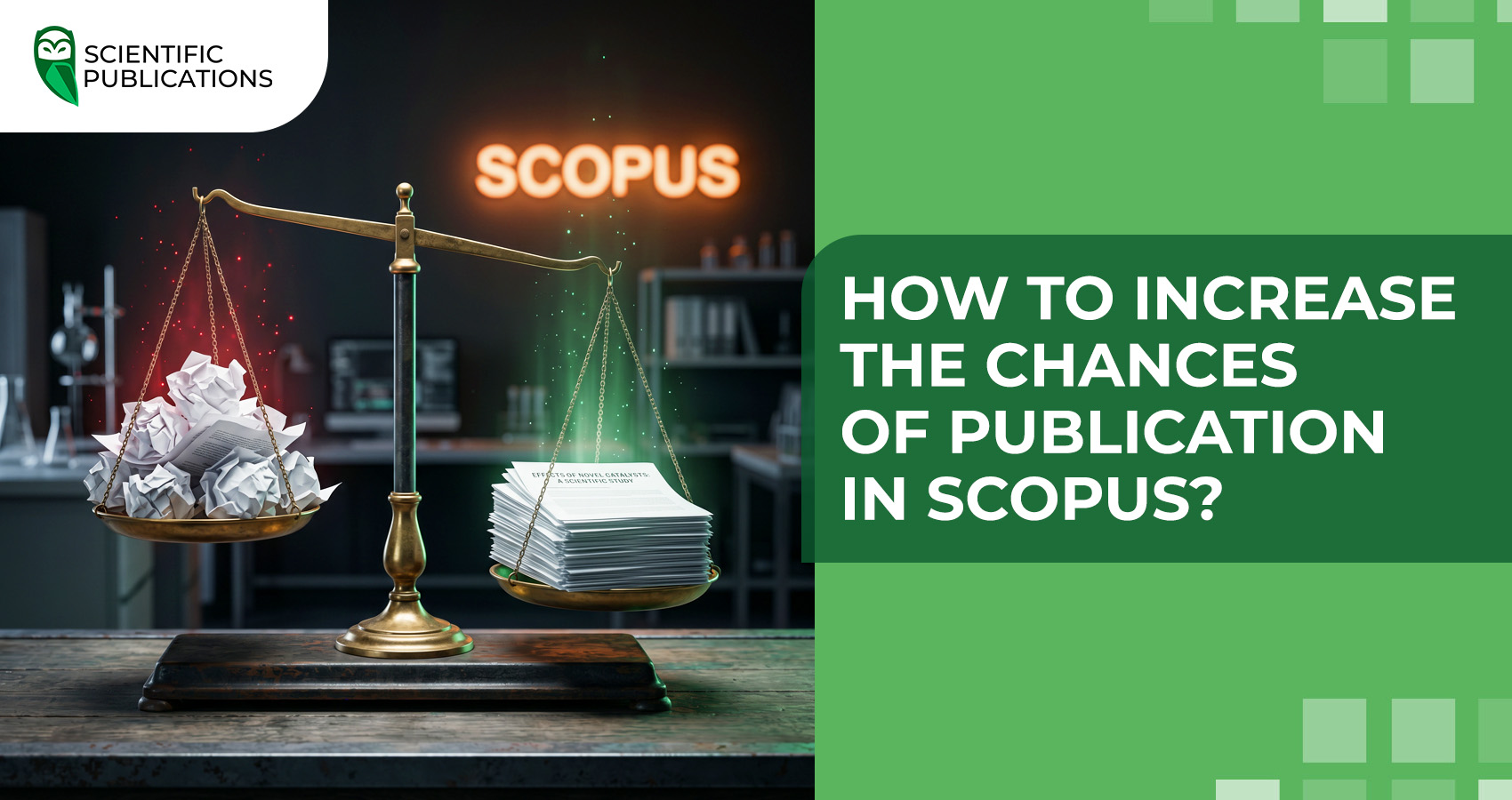
It is important to note that publication in Scopus is not simply the dissemination of research results in any journal on the platform. A scientific article must undergo thorough review and selection before it is accepted by the editorial office for publication in a journal. Scientific journals, in turn, undergo strict selection by the independent Scopus expert committee (Content Selection and Advisory Board, CSAB).
Thus, Scopus is an authoritative scientometric database in which only high-quality materials are indexed and which maintains high standards of academic integrity.
How does the publication process in Scopus take place?
Before being published in a Scopus journal, a scientific article must undergo a strict review process to ensure compliance with the journal’s requirements. In particular, the article goes through the following stages:
- Initial assessment. The work is checked for compliance with the journal’s subject area, recommended length, and formatting style, and the quality of the translation is also assessed.
- Peer review. If the article meets the above-mentioned criteria, the peer review process begins, which lasts on average 4-6 months.
- Revision. If during peer review, independent experts identify minor issues in the text that the author can correct, the work is sent for revision. There may be several such stages; however, it is better for the author to revise the research immediately in accordance with the reviewer’s recommendations in order to avoid possible rejection of the article.
- Decision on publication. Based on the results of peer review (and revisions, if required), the journal’s editorial office makes a decision on the acceptance or rejection of the scientific article.
A significant proportion of studies receive refusal of publication due to non-compliance with the stated requirements of the journal, low quality of the work, lack of original results, and so on.
Below, we have gathered the main aspects that must be followed for successful publication in a Scopus journal.
Requirements of the scientific journal
Half of the success of publication depends on the selected scientific journal. Before starting to prepare a scientific article, it is necessary to decide on the journal for publication. Carefully familiarise yourself with its requirements regarding formatting, structure, length, subject area, and reference citation style. If the work does not correspond to the journal’s thematic focus, it may be rejected at the initial assessment stage, which, as a rule, makes resubmission to the same journal impossible.
That is why the selection of a scientific journal must be approached carefully, because the success of publication, as well as the scientist’s future career development, authority, and professional growth, depends on it.
Quality and structure of the scientific article
In order to increase the chances of publication in a Scopus journal, the work must meet the high standards of this database. In particular, the text of the article must contain original research results and be logically structured. As we have already noted above, in order to successfully pass peer review, the work must comply with the journal’s requirements, in particular the recommended structure.
This will help to present the research results clearly, as well as improve their perception by both reviewers and the scientific community. In addition, the text must be of high quality and comply with academic standards and scientific style.
These aspects will improve reviewers’ overall impression of the work, as in this way the scientist will demonstrate responsibility and interest in successful publication.
Novelty of the research
The research must propose new approaches to solving a particular problem, contain original results, and stand out through a relevant topic. Editorial offices of prestigious scientific journals particularly value works in which scientific novelty and an unconventional view of the subject of study can be observed. In the context of the constant development of science, when more and more tools and resources are emerging for conducting research, the greatest value is found in scholarly works that genuinely expand existing knowledge and offer new results.
Academic translation
A high-quality and accurate translation of a scientific article plays an important role when submitting the article for publication. It makes the article understandable, logical, and professionally presented for the editor and reviewers. Even high-quality research may receive rejection if the text contains translation errors, inaccurate wording, calques, or conveys the content unclearly.
Such a translation helps to convey terminology correctly, preserve scientific style, present the sections of the article clearly, and also reduces the risk of its rejection at the initial review stage.
Publication in a Scopus journal is a complex process that requires special attention and effort on the part of the scientist. Research that is of high quality, original, and corresponds to the subject area of the scientific journal has a significantly greater chance of being successfully published.
Need help with publication in Scopus? Contact Scientific Publications. Our specialists will audit your work and help you choose a scientific journal that will correspond to your scientific goals. We will also support you at all stages of the publication process, up to the moment the work is indexed. Do you still have questions? Fill in the form below, and our manager will contact you shortly. Together – towards scientific achievements!