


Choosing a scientific journal to publish your research is an important step that affects its visibility, citation and scientific impact. Web of Science is one of the leading scientometric databases, publication in which positively affects the reputation of a scientist. In this article we will tell you how to find a suitable journal to publish a scientific article in WoS.
Criteria for selecting a journal in Web of Science
Web of Science journal collection includes more than 34 thousand scientific publications. Choosing the right journal can be a daunting task. To make the process easier, we have prepared key criteria to consider when choosing a journal.
1. Aims and scope of the journal
Every journal has a clearly defined purpose and scope, which play a key role in selecting submissions for publication. Important aspects are the topics the publication focuses on and the types of articles it accepts.
Before submitting material, it is important to familiarise yourself with the purpose and subject areas that the journal specialises in to ensure that your work fits its subject matter and requirements. This will help to avoid rejecting material that does not fit the journal's profile.
Some journals may specialise in certain types of research, such as original, clinical or basic research. This information is usually indicated on the journal's website, which is also worth considering when preparing a paper.
2. The audience of the journal
One of the key aspects of choosing a journal is understanding its audience. It is important that your findings are targeted at the right readers and resonate with experts in your field.
Start by analysing journals that focus on your research area. If your research is interdisciplinary, your work may be of interest to scientists from related fields. In this case, a journal specialising in several fields of science may be an excellent option for publishing your article.
3. Key scientometric indicators of a journal
Publication metrics are one of the most important criteria to consider when selecting a journal to publish research. In Web of Science, the main characteristics of the impact of the publication are such metrics:
- Journal Impact Factor (JIF) – the average number of citations of journal articles over the last two years
- Quartile (Q1-Q4) – ranking of a publication in a particular field of knowledge
- Journal Citation Indicator (JCI) – an indicator that measures the average number of citations received by articles published in a journal over the last three years.
These indicators reflect the citability and prestige of a publication.
4. Review and publication timelines
When choosing a journal to publish in, it is important to consider review and publication deadlines, as they can have a significant impact on the time it will take before your paper is placed in an issue of the journal. This is especially important if you need to publish your paper as soon as possible for your thesis defence or degree. Journals with high scientific metrics are usually characterised by longer review and publication times.
5. Indexing in Web of Science
Some publications may claim a presence in WoS but are not actually indexed in the database. Check if the journal's indexing is up to date to avoid publishing in a "predatory" publication.
You can do this in the Master Journal List or on the official Clarivate website. Also be careful of journals that guarantee publication in a short period of time and do not involve peer review. Most likely, you are facing a "predator".
Tools for finding the right journal in WoS
1. Journal Citation Reports (JCR) is a handy tool that helps scientists select scientific journals to read and publish. It compiles independent data and metrics on tens of thousands of publications, allowing you to compare their quality and impact. The information in the JCR is based on real citations and supported by the scientific community, making it a reliable source for analysing journals.

- Master Journal List (MJL) is a free and reliable tool for finding and comparing authoritative scientific journals, books, and conference proceedings indexed in Web of Science. While not as detailed as Journal Citation Reports, MJL helps researchers quickly assess the impact of a particular journal.
On each publication's page, key information can be found: publisher, level of coverage in Web of Science, citation rates, as well as data on peer review and open access policies.

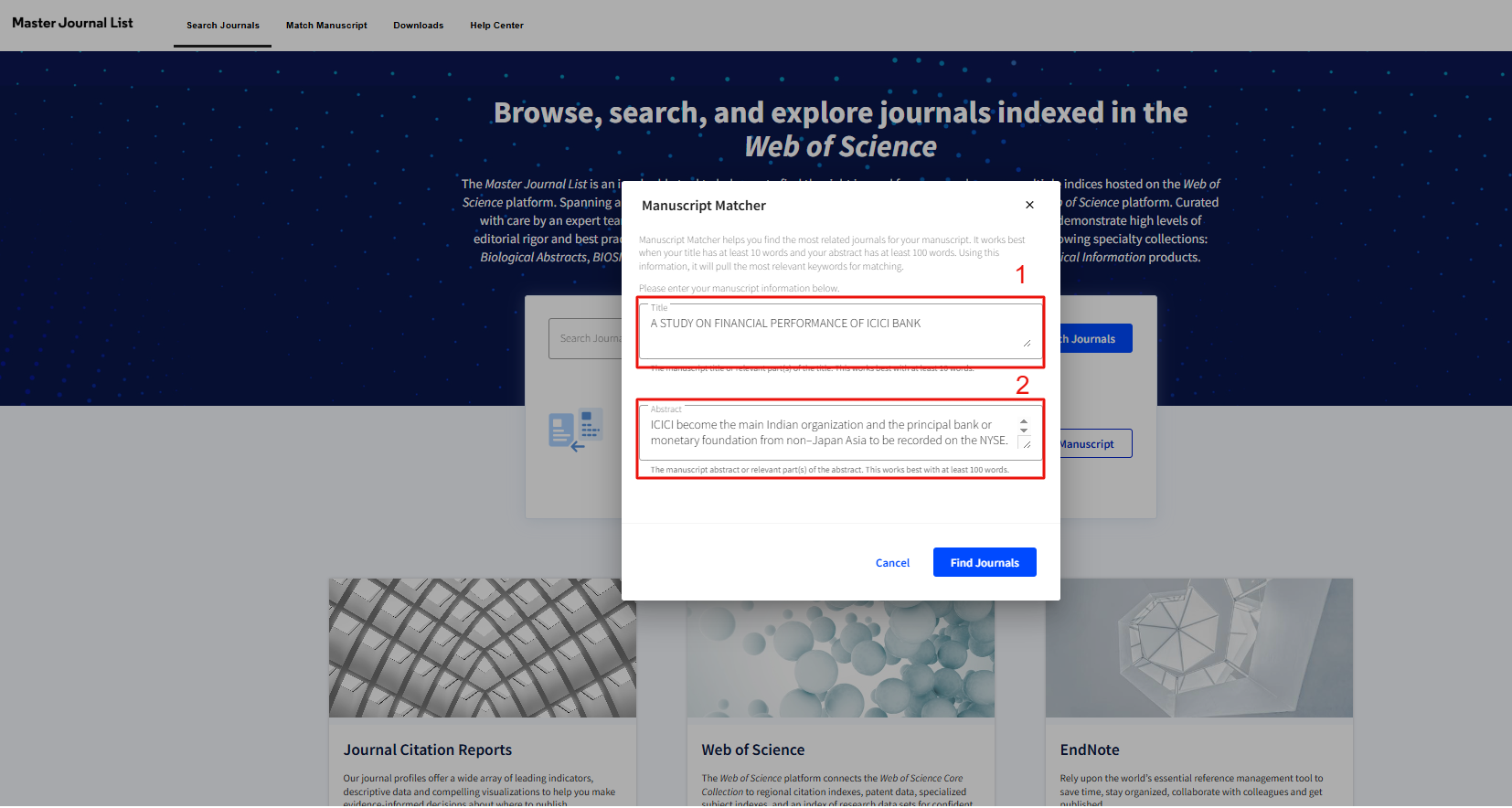
- Match Manuscript is a new tool for scientists to help them find the right scientific journals to publish an article. Match Manuscript allows you to upload or enter the key data of your manuscript (e.g. title, abstract, keywords or the text itself). The tool then analyses the content of the article and matches journals that best match the research topic.
Still have questions regarding the publication process and finding the right journal in Web of Science? Leave your contact details in the form below and our expert will contact you to clarify the details of your publication.


