Google Scholar is one of the largest search engines that allows users to find a variety of scientific literature and resources. Why is it important for a researcher to have a profile?
.png)
One of the advantages of Google Scholar for users is that it is free of charge. The only exception is when publications are in closed access. Another advantage of Google Scholar is the large volume of materials, which exceeds such well-known databases as Scopus and Web of Science. The search engine covers many disciplines, and among the sources you can find: abstracts, articles, books, theses, etc. When conducting research and writing scientific material, authors use the Google Scholar tool to find the information they need.
Why does an author need a Google Scholar profile?
An author profile in this search engine allows researchers and scientists to showcase their research and scientific publications. Thanks to a Google Scholar profile, an author can share his or her contact information, which helps to increase his or her popularity in the scientific community.
The author's profile tracks all scientific publications written by the author. The author can track their scientometric indicators, such as the Hirsch index, citation index, and i10 index. Users can also see a list of co-authors with whom the author has worked.
How to create a Google Scholar profile?
Creating a Google Scholar profile is not difficult. First, you need to go to the home page and click on "Create a profile".
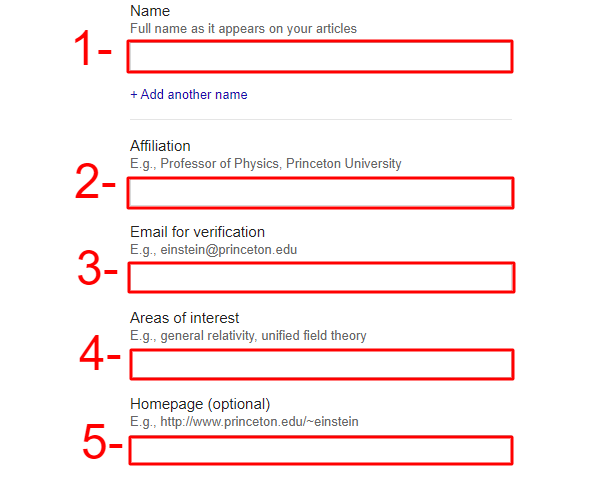
- The first thing you need to do is fill in your first and last name. They must be written as they appear in scientific articles.
- Affiliation. Here you need to indicate all valid academic titles and degrees, as well as your place of work.
- Provide an email address for confirmation.
- List all areas of interest.
- Personal page, but this information is not required to create a profile.
After filling in the information on this page, click "Next" to proceed to the second stage.
At this stage, the system automatically searches and provides a list of publications that may belong to you. You need to review all the proposed works and select those that were written by you.
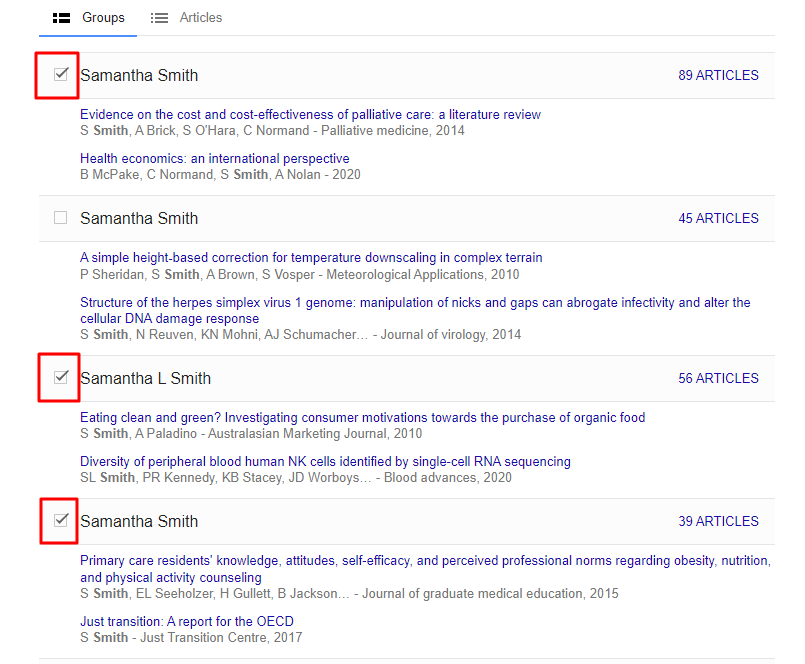
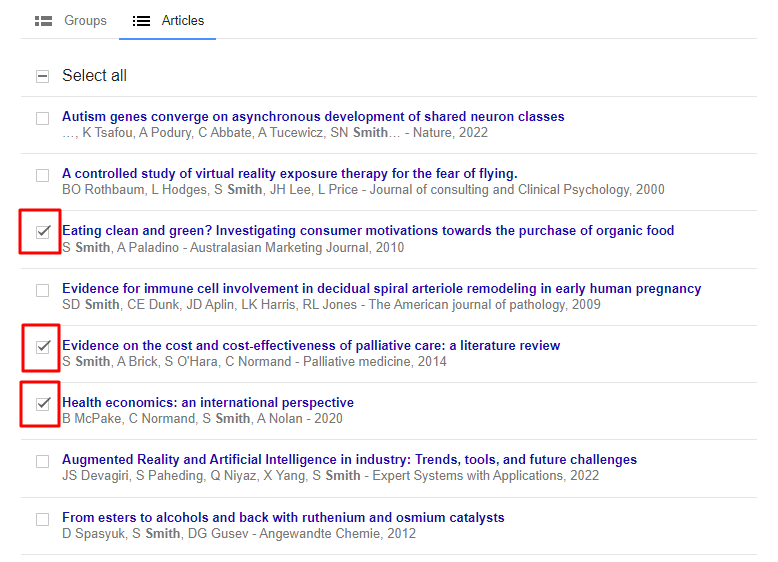
After checking all available publications and filtering out the works of other authors, proceed to the next page - profile settings.
When you create a profile, it is automatically set as private, so it is important to change it to public. You can also select the option to have the system automatically find articles written by you, as well as changes made to those already published.
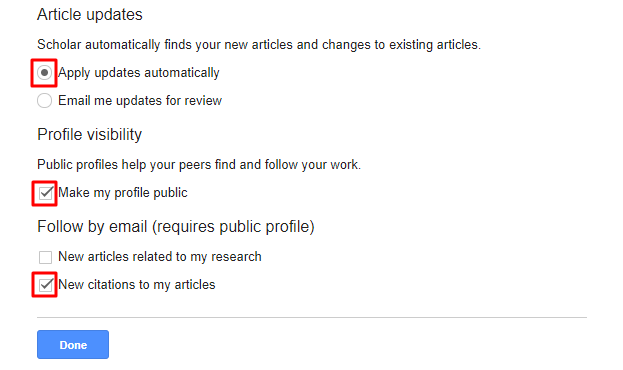
You can also choose to receive email notifications when your article is cited by other researchers.
This was the final step. Your profile has been successfully created.
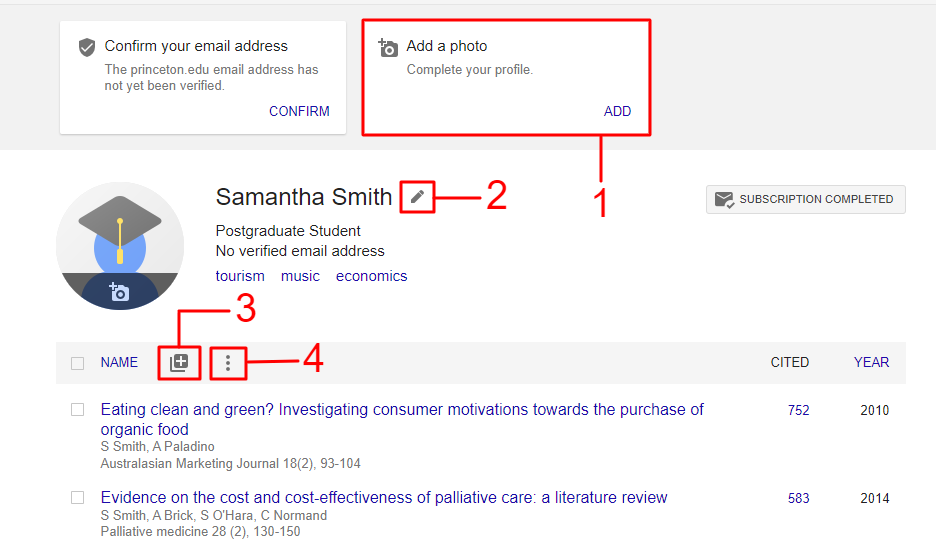
The Google Scholar profile is quite simple and easy to use. You can always edit the information provided:
- Change profile photo.
- Edit profile information (name, affiliation, email, etc.).
- Update the list of materials.
- View the bin. You can merge articles, delete and export them.
The main scientific metrics that can be seen in the author's Google Scholar profile:
- Citation index
- Hirsch index
- i10 index
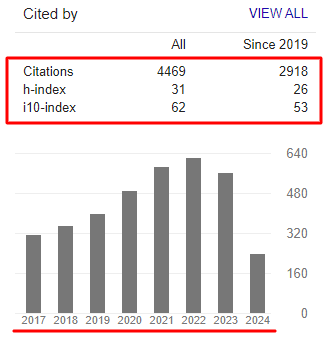
The function of tracking indicators in the dynamics over the years is also convenient.
How can I increase the citation of my work in Google Scholar?
Among the recommendations for increasing citations in Google Scholar are the following:
- Publish high quality research in journals with a high impact factor;
- Write papers in co-authorship with other scientists;
- Participate in scientific conferences;
- Publish works in open access journals;
- Constantly update the data in your Google Scholar profile and optimise your profile;
- Cite your own research, but there are certain limitations, so you should control self-citation.
- Use relevant keywords;
- Cite the latest research by other scientists;
- Participate in the evaluation of other studies;
- Carry out active research activities.
Following all of these recommendations will help to increase your citation. Being active, such as participating in conferences, writing and publishing papers on relevant topics of interest to the scientific community, and using relevant keywords, will help other authors find your work faster when searching for research.
You should constantly update the data in your Google Scholar profile to ensure that the information is up-to-date. It is worth checking the materials regularly, as there are often cases when research that you have nothing to do with is automatically added. This happens because of the same surname, first name, or initials.
If you need to improve your scientific metrics, Scientific Publications provides such services. Our highly qualified specialists will guarantee you an organic increase in Google Scholar citation and Hirsch index. Fill out an application on the website, and our manager will contact you within a working day.