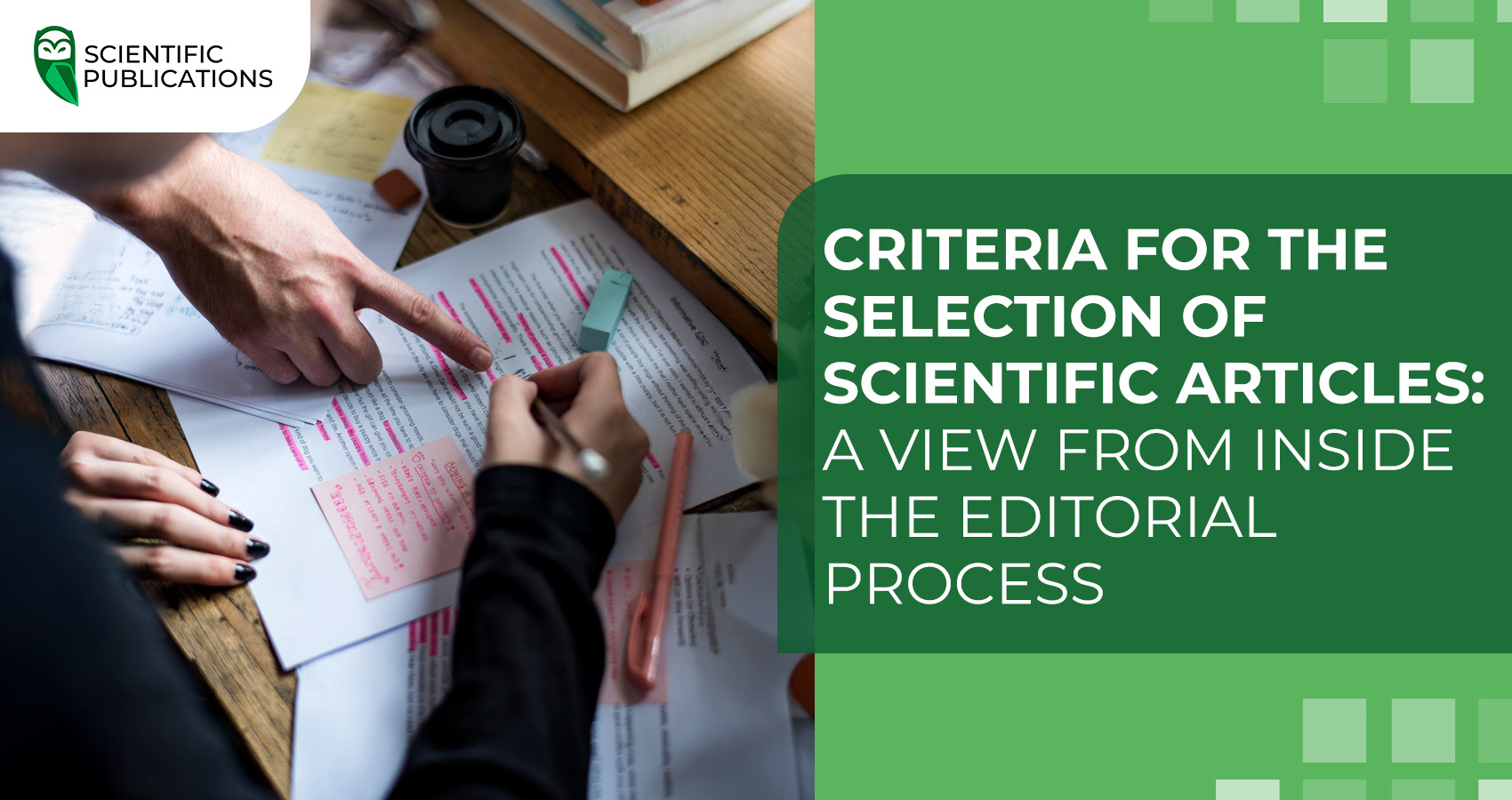
Scientific journals play a key role in disseminating knowledge, but not every submitted article is published. The editorial process is a complex mechanism that combines scientific evaluation, technical verification, and compliance with journal standards. Understanding the criteria that editors and reviewers use to select articles can help authors increase their chances of success. Today, we will talk about what journal editors pay attention to when selecting scientific articles for publication.
1. Originality and novelty of research
One of the most important criteria is the originality of the work. Editors prefer articles that offer new ideas, approaches or results, as well as expand the boundaries of knowledge in a particular field. The article should clearly demonstrate how it differs from previous research and what contribution it makes to science.
In addition, reviewers pay attention to how the author argues the novelty of their work. This can be a clear comparison with previous studies or the presentation of unique data. Articles that repeat known results or add nothing new are usually rejected at an early stage.
2. Quality of the scientific article
An article will not be accepted for publication if it does not meet quality standards. Editors and reviewers carefully assess how correctly the research has been conducted and the manuscript has been prepared. This includes several key aspects:
- clarity of the hypothesis or objective: the article must clearly state the objective of the research or the hypothesis put forward by the author;
- methodology: it is important that the researcher chooses a research methodology that corresponds to its format;
- reliability of results: data must be presented transparently and with proper documentation;
- conclusions: they must logically follow from the results and relate to the purpose of the research.
Articles with methodological flaws, such as incorrect sampling or lack of control variables, are often rejected, even if the topic is relevant.
3. Relevance to the journal's subject area
Each journal has its own specialisation, which is usually specified on its official website. Editors first check whether the article is relevant to the journal's subject area. It is important for researchers to carefully study the instructions for authors and previous publications of the journal to ensure that their work fits its profile.
It should be noted that a significant number of articles are rejected precisely because they do not correspond to the subject matter. Some journals even conduct a preliminary assessment (desk review) to filter out irrelevant manuscripts before direct review.
4. Quality of presentation and structure
Even the most relevant research can be rejected if it is poorly structured and formatted. Editors value clarity, logic, and structure in the text. The article should be understandable not only to narrow specialists but also to a wider academic audience.
The main requirements for writing include:
- IMRAD structure (introduction, methodology, results, discussion);
- writing the text in accordance with the norms of scientific style;
- correct formatting, including citations, tables and figures, in accordance with the journal's requirements;
- high-quality academic translation into English.
5. Ethical standards
Compliance with ethical standards is mandatory in scientific publications. If the editors find violations during the review stage, the article will be rejected immediately. During the evaluation, they pay attention to a number of aspects, in particular:
- the presence of plagiarism: the use of someone else's ideas or text without proper citation is unacceptable;
- transparency of data: authors must clearly indicate the sources from which they obtain information;
- research ethics: if people or animals were involved in the research, confirmation of ethical approval is required.
Violation of ethical standards can lead not only to the rejection of the article, but also to serious reputational consequences for the author.
6. Relevance and social impact
For the most part, articles that are not only scientifically significant but also have a potential impact on the scientific field or sphere of social life are accepted for publication.
Relevance can be demonstrated by alignment with current scientific trends or social demands, addressing pressing contemporary issues, and influencing future research.
In their work, authors should clearly explain why their work is important and how it can be applied in practice.
The selection of scientific articles is a multi-stage process in which editors and reviewers evaluate various characteristics of manuscripts. Understanding these criteria helps authors better prepare their work, avoid common mistakes, and increase their chances of successful publication.
If you want to get guaranteed publication in a scientific journal, contact Scientific Publications. Our specialists will audit your manuscript and check it for compliance with all standards and requirements. In addition, we will accompany you through all stages of the publication process: from choosing a journal and submitting an article to its indexing. Would you like a free consultation? Leave your contact details in the form below, and our manager will contact you shortly. Together to new scientific achievements!