Collaboration at universities does play an important role in the development of science and students. It provides an opportunity to exchange knowledge, experience and ideas between researchers, teachers and students, which contributes to the overall development of the academic community.
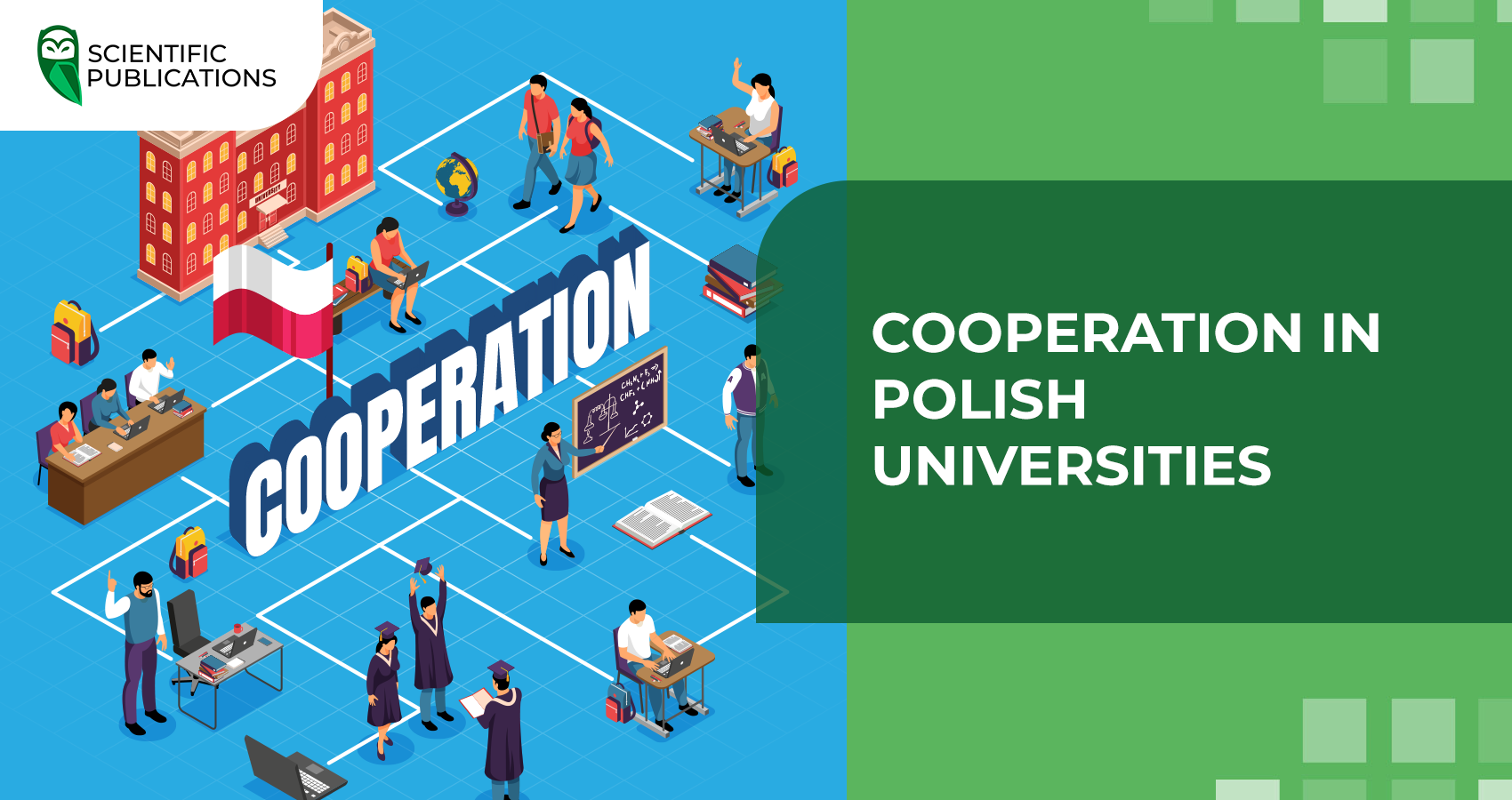
Cooperation facilitates the implementation of joint research projects that can lead to significant scientific discoveries and innovations. Cooperation programmes at universities also allow students to gain practical skills, which increases their competitiveness in the labour market. This, in turn, provides an opportunity to gain interesting, useful and valuable experience that contributes not only to professional but also to personal development. What cooperation programmes are available at Polish universities?
1. Joint programme of Kozminski University and Montpellier Business School.
Kozminski University in Warsaw has signed a new agreement on a double degree programme with the French Montpellier Business School. Thanks to this agreement, students who complete the Master's programme in Management (in English) have the opportunity to receive diplomas from both educational institutions. Montpellier Business School is one of the best business schools, which has been ranked by the Financial Times for many years.
The agreement allows students of Kozminsky University to gain knowledge and take advantage of the international community of a well-known foreign university without having to travel abroad for the entire period of study. As part of the programme, students will spend two semesters in France, completing relevant courses at the Montpellier Business School campus.
2. University of Belsko-Biala will cooperate with Rockwell Automation.
The University of Belsko-Biala and Rockwell Automation have signed a cooperation agreement. Rockwell Automation is one of the world's largest manufacturers of industrial automation systems. Among the company's leading brands are Allen-Bradley and FactoryTalk software, and the company is represented in more than 100 countries.
The cooperation agreement provides an opportunity for both teachers and students, as it provides for the implementation of joint research projects, the organisation of seminars, lectures and training courses from Rockwell Automation specialists, internships and practices for students of the Faculty of Mechanical Engineering and Computer Science.
Rockwell Automation, in cooperation with the University of Bielsko-Bialskie, will create a training laboratory equipped with Allen-Bradley hardware and software. The company will also set up a recreation and study area for students.
3. Cooperation between Polish and German universities.
Universities in Poland and Germany have been cooperating for decades. The German Academic Exchange Service (DAAD) supports various forms of cooperation between Polish and German universities through various programmes.
For example, the German Institute Partnerships programme, whose main goal is to promote cooperation between higher education institutions offering German language and literature and/or German as a foreign language at a German university and their Polish partner institutions. The funding covers the professional development of Polish university professors, the qualification of future German teachers in higher education institutions and secondary schools in Germany and Poland, as well as joint research projects and curricula. Currently, the universities of Warsaw and Wuppertal, Wroclaw and Heidelberg, as well as Bydgoszcz and Mainz cooperate under this programme.
In addition, it is worth mentioning two university centres that are also funded by DAAD: the Willy Brandt Centre at the University of Wroclaw and the Alexander Bruckner Centre at the Universities of Halle and Jena.
Cooperation at universities promotes the exchange of knowledge, ideas and experience between researchers, students and other participants in the educational process, which contributes to progress in various scientific fields and innovations.
Cooperation between higher education institutions, other research institutions and businesses is key to creating innovative technologies, developing new products and services, and increasing the competitiveness of the country as a whole. This contributes to economic growth, the adaptation of scientific achievements to practical application and the improvement of human potential through education and research.